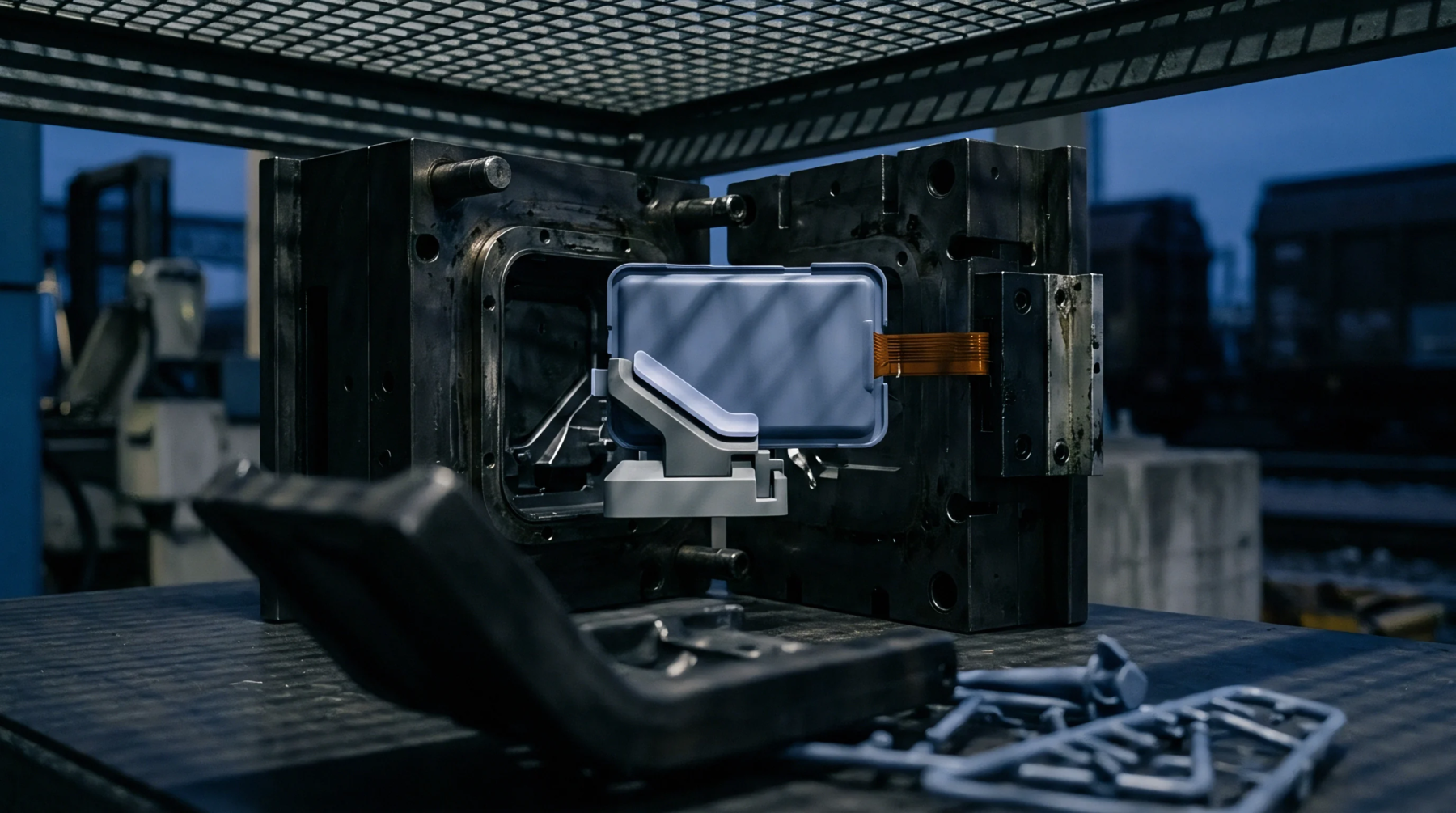
Controlling Anisotropic Shrinkage in Reinforced Polyamide Injection Moulding
Controlling anisotropic shrinkage in reinforced polyamides requires directional shrinkage tool scaling, steel-safe cavity design, and optimized hold pressure profiles.
Controlling anisotropic shrinkage in reinforced polyamides requires directional shrinkage tool scaling, steel-safe cavity design, and optimized hold pressure profiles.
Recutting tool steel establishes a stable process window that lowers long-term scrap costs and cycle times compared to forced parameter tuning.

Dynamic cavity pressure curve integration over hold time governs volumetric polymer density and predicts final part dimensions before tool ejection occurs.

Stabilize unreinforced PP dimensional drift by maximizing in-mold crystallization via hot tooling and extended pack, then conditioning parts prior to inspection.
Cavity surface texture increases interfacial thermal contact resistance, delaying resin skin freeze and increasing semi-crystalline thermoplastic shrinkage.
Expertise is a utility, not a secret. sentiention™ publishes its working knowledge as open reference: intelligence layer covering the materials it sources, the markets it enters, and the reference that serves both.