Bailment Contract Structures for Managing Overseas Injection Tooling and Fixtures
Cross-border bailment structures protect overseas injection tooling through explicit legal title separation, permanent asset marking, and enforceable repossession protocols.
Title

Cross-Border Bailment Mechanics and Legal Ownership Creation
Bailment splits ownership from possession: the foreign buyer keeps legal title to the steel, while the overseas molding plant receives physical custody strictly to manufacture parts. In civil law jurisdictions across East Asia and Continental Europe, standard purchase orders or equipment leases leave bailed assets unprotected against local creditor claims, tax liens, and bankruptcy actions. Protecting these assets requires a dedicated, standalone tooling bailment agreement signed before the supplier takes delivery of the mold, hot runner controller, or specialized end-of-arm tooling.
When a buyer funds a 32-cavity P20 steel mold or a hardened H13 core insert at an offshore toolroom, title vests as each milestone payment clears. The contract must explicitly define the mold maker as a temporary bailee with zero equity, no right of retention, and no lien against the asset. Possession remains subject to a revocable license that cancels automatically if the supplier breaches the agreement, fails quality standards, or moves the equipment without approval.
Bailed injection molds in foreign jurisdictions are governed by property law where the press physically sits, not where the buyer is incorporated.
Cross-border bailment contracts must align chosen governing law with local court enforcement practices. Designating the buyer’s home court offers little protection if local court officers cannot enforce an asset preservation order inside a foreign factory. Sound contracts pair international arbitration clauses with explicit submission to local district courts to secure immediate preliminary injunctions and physical tool repossession.
Distinguishing Bailed Steel from Production Tooling Deposits
Custom tooling financing usually follows progress payments tied to T0 sampling, T1 dimensional checks using ISO 20753 test bars, and final part approval. Title shifts incrementally as each disbursement clears, so the bailment agreement must outline a partial ownership schedule during fabrication. Once T1 samples meet the critical tolerances defined by DIN 16742 TG6, full ownership consolidates with the buyer, shifting the toolmaker’s legal status from vendor to bailee.
Amortizing tooling costs into part piece-prices creates specific ownership risks. When tooling fees are spread across production volumes, suppliers often claim title to the core, cavity plates, and side-action slides until the last amortized unit ships. Eliminating this risk requires a clause stating that title transfers as soon as initial production capability is established, leaving any unamortized balance as an unsecured debt obligation.
Separating ownership of custom core inserts from standardized mold bases simplifies managing assets across borders. Standard DME or HASCO bases are off-the-shelf components, while custom cores, core pins, hot runner systems, and specialized jigs hold the buyer’s intellectual property and production capacity. Drafting bailment terms to cover custom inserts while leaving standard mold frames with the local supplier lowers customs duties if equipment must be moved in an emergency.
The core asset definition clause must state that ownership covers all core inserts, cavity blocks, EDM electrodes, CAD drawings, CNC code files, hot runner controllers, and cooling manifold adapters created for the project.

Stamp

Physical Marking Systems and Asset Identification Standards
Permanent identification etched into the steel provides prima facie proof of ownership during audits or court-ordered seizures. Tooling without clear, indelible markings can easily be swept onto a factory’s balance sheet during insolvency. Foreign courts routinely reject bailment claims when a buyer cannot prove that the equipment on the press floor matches the specific tool described in the legal contract.
Engraving ownership details on the primary mold base clamping plate ensures clear visual identification. Deep CNC milling or laser engraving directly into the frame withstands high molding temperatures, thermal wash, and repeated cleaning. A minimum milling depth of 0.5 millimeters keeps the markings intact even after routine surface grinding during maintenance.
Pairing physical tags with digital tracking improves asset verification. High-temperature RFID transponders set into shallow pockets on non-operating surfaces let auditors verify a tool’s identity without halting production. Storing encrypted serial numbers, contract references, and authorized facility codes on these tags enables fast verification during unannounced site inspections.
| Identification Method | Durability Index | Installation Surface | Tamper Resistance | Audit Verification Speed |
|---|---|---|---|---|
| Deep CNC Steel Engraving | Extreme (Tool Life) | Operator Side Mold Base Plate | Very High | Manual Visual Inspection |
| Riveted Stainless Placard | High (500k Cycles) | Non-Operator Side Frame | Moderate | Manual Visual Inspection |
| High-Temp RFID Transponder | High (200°C Rated) | Milled Recess Pocket | High | Automated Scan (Instant) |
| Laser Etched Optical Matrix | Moderate (100k Cycles) | Core Base or Ejection Plate | High | Visual Scanner Required |
Registration Protocols for Fixtures and Ancillary Tooling
Auxiliary fixtures need the same systematic marking as primary molds. End-of-arm tooling, degating fixtures, insert feeders, and cooling jigs are vital parts of the production cell. Omitting them from the marking program means an extracted mold may be unusable without its supporting automation.
Standardized physical marking requires a consistent data string etched onto every bailed hardware component across all sites.
- Corporate Titleholder Name must state the exact legal entity holding title, matching international corporate registries.
- Unique Asset Serial Number links the physical tool directly to the bailment register and master purchase order.
- Jurisdictional Notice Text states in the local language that the equipment is bailed property free from local sale, mortgage, or lien.
- Fixed Manufacturing Location Code specifies the approved facility where the asset must remain during production.
Suppliers sometimes object to deep steel engraving, claiming that milling plates weakens mold bases or distorts cooling channels. Standard mold design refutes this: outer clamping flanges contain non-stress zones that easily accommodate asset markings without affecting clamp pressure or structural fatigue life.


Covenant

Maintenance Thresholds and Shot Count Amortisation Schedules
Bailment terms must draw clear boundaries between routine preventive maintenance and major capital refurbishments. A supplier holding a 1.2344 ESR tool running glass-filled polyamide is responsible for routine servicing at its own expense. Setting explicit shot-count intervals for greasing guide pins, cleaning gas vents, and replacing fluorocarbon seals stops tool degradation before it starts.
Preventive maintenance is the press operator’s responsibility, while capital re-tooling is dictated by steel fatigue limits.
Shot counters supply a tamper-proof record of tool activity over its service life. Non-resettable mechanical or electronic counters mounted directly on the mold frame log every stroke, giving clear data for maintenance audits. Contracts should explicitly state that tampering with, bypassing, or resetting a shot counter is a material breach that triggers immediate contract termination and tool recovery.
| Maintenance Event | Interval (Shots) | Execution Scope | Cost Allocation | Validation Document |
|---|---|---|---|---|
| Routine Line Service | 10,000 | Clean vents, grease slides, inspect seals | Moulder (Bailee) | Press-Side Logbook |
| Intermediate Overhaul | 100,000 | Ultrasonic wash, seal replacement, line check | Moulder (Bailee) | Maintenance Dossier |
| Major Tool Refurbishment | 500,000 | Replace core pins, re-polish cavity surfaces | Tool Owner (Bailor) | Dimensional Inspection Report |
| End-of-Life Core Replacement | 1,000,000 | New hardened steel insert manufacturing | Tool Owner (Bailor) | Full T1 Qualification Record |
Can Local Creditor Claims Freeze Bailed Steel?
When an overseas supplier defaults, unsecured creditors often try to seize physical assets on the factory floor. A proper bailment agreement shields the equipment by establishing that the supplier never owned any equity in the steel. To ensure this protection holds up under local commercial codes, the agreement should be registered with local government property registries or commerce bureaus where required.
Protecting the asset requires strict rules on tool modifications. Suppliers must obtain written permission before carrying out welded repairs, changing gate locations, altering runner sizes, or modifying cooling lines. Unauthorized alterations compromise tolerances under ISO 2768-mK, invalidate CAD drawings, and break the chain of custody needed to prove tool integrity.
On-site audits enforce compliance with maintenance covenants. Owners should retain the legal right to conduct unannounced inspections, cross-checking shot counter readings against delivery records to confirm production consistency.
As a rule of thumb, tools running abrasive glass-filled resins require vent cleaning every shift and core pin replacement at double the frequency used for unfilled polyolefins.

Seizure
Jurisdictional Repossession Mechanics and Ex Parte Orders
Extracting bailed tooling from a non-compliant or insolvent factory is the hardest phase of cross-border asset management. Foreign courts require clear proof that the bailment contract was breached, title remains with the buyer, and formal demand for return was served under local notice rules. Without pre-arranged exit protocols, factory security can delay extraction long enough for local creditors to place a legal freeze on the site.
Emergency recoveries depend on signed access waivers from both the supplier and the industrial park landlord. These waivers give the asset owner or logistics agents explicit authority to enter the compound, unclamp tooling from presses, load hardware onto trucks, and pass through security gates without real-time sign-off from local management.
- Formally serve breach notice detailing specific contractual defaults and observing the mandatory cure period set in the agreement.
- File an emergency asset preservation petition in the local district court to secure an ex parte order stopping the supplier from moving or altering the tool.
- Dispatch an authorized recovery team with original drawings, serial registries, title deeds, and court orders directly to the plant.
- Verify physical inventory on the press floor, confirming that core inserts, auxiliary fixtures, hot runner controllers, and automation jigs are accounted for.
- Decouple and rig hardware using certified crane operators, packing equipment into ocean containers or air freight crates under customs supervision.
- Process bonded customs export filings to clear export control without triggering domestic tax penalties or back-duties on re-exported tooling.
Local customs authorities treat re-exporting tooling as a taxable event unless original import filings match export dockets exactly.
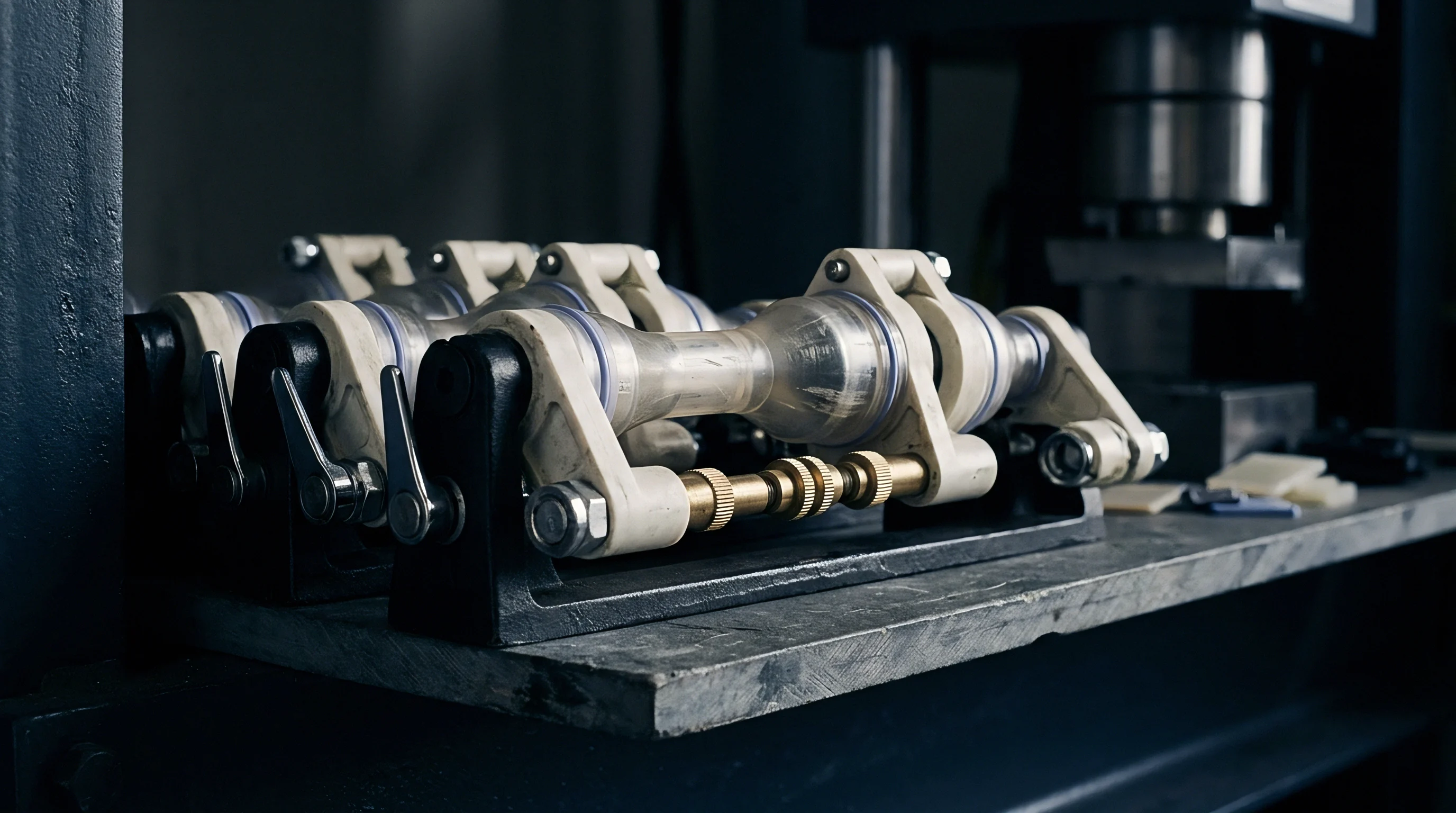
Cross-Border Customs Declarations and Duty Drawback Exposure
Moving bailed tools across borders involves customs classifications that create real financial exposure. Importing equipment under temporary admission regimes defers value-added tax and tariffs, provided the tooling leaves within twelve to twenty-four months. Failing to extend temporary import bonds or document re-export triggers automatic tax assessments, fines, and potential seizure by customs authorities.
Calculating total exposure during a contested recovery requires weighing original tooling cost, amortization status, unpaid component invoices, export tariffs, and emergency logistics expenses.
Consider a 4-cavity automotive lighting mold built for 120,000 USD and imported under temporary tax deferral. The supplier completes 150,000 units of a 300,000-unit contract before defaulting, leaving an unamortized balance of 60,000 USD. If lapsed temporary import permits force customs to reclassify the mold as a permanent import upon extraction, a 13 percent value-added tax and 6 percent tariff apply to the residual value, generating 11,400 USD in unexpected tax liabilities.
Further costs arise if the supplier asserts a lien for unpaid part invoices. If a buyer owes 35,000 USD for completed shipments but faces 8,000 USD per day in downtime penalties at its assembly plant, paying the disputed invoices into a court escrow account is often the fastest way to release the tool.
Failing to fulfill local customs registration steps during initial import leaves buyers unable to secure export clearance certificates during an emergency recovery.

Remedy

Contractual Damages versus Equitable Relief in Overseas Disputes
Monetary damages awarded by foreign courts or arbitration panels rarely cover the supply chain losses caused by withheld tooling. A 200,000 USD judgment offers no comfort when an assembly line stops for lack of molded housings. Bailment contracts must prioritize equitable remedies ~ specifically orders for specific performance and immediate injunctions for physical surrender of the steel ~ over cash compensation.
Securing specific performance requires explicit default triggers in the agreement. Defining conditions such as delivery delays beyond fifteen days, scrap rates exceeding 3.5 percent over three consecutive shifts, or unauthorized subcontracting gives the buyer an immediate right to enter the plant and remove the tooling.

Transition Provisions for Direct Mold Transfers
Transferring injection tooling to a secondary factory requires established technical and legal handoff procedures. Terms must require the outgoing bailee to surrender a complete technical transfer package with the physical tool. This includes validated process parameters, viscosity curves, gate seal studies, hot runner wiring schematics, maintenance logs, and CAD files in neutral formats like STEP or IGES.
- Validated Molding Process Dossier covers machine screw specifications, injection speed profiles, cavity pressure curves, and cooling flow rates.
- Complete Maintenance Log History details historical wear, cavity polishing cycles, insert replacements, and press-collision repairs.
- Up-to-Date CAD Tooling Package provides 3D files reflecting every physical change made to cores, cavities, or runners during production.
- Spare Parts Inventory List itemizes core pins, ejector pins, heater bands, and spare hot runner nozzles held on site.
A comprehensive risk matrix clarifies operational boundaries and legal outcomes across the tooling bailment lifecycle.
| Risk Event | Legal Exposure | Contractual Protection Mechanism | Primary Enforcement Remedy |
|---|---|---|---|
| Unauthorized Tool Relocation | Loss of physical asset tracking | Geofenced RFID / Mandatory location clause | Immediate repossession & breach damages |
| Supplier Bankruptcy / Insolvency | Third-party creditor attachment | Registered ownership placard / Court filing | Third-party interpleader exemption claim |
| Poor Tooling Maintenance | Premature core/cavity degradation | Shot-counter thresholds & maintenance log audits | Back-charge maintenance costs to bailee |
| Refusal to Surrender Tooling | Production line shutdown at destination | Pre-signed factory access consent & escrow terms | Ex parte injunction for immediate surrender |
Final exit clauses dictate how equipment is handled when a program ends. The buyer maintains full authority to order the destruction of obsolete cores, the re-export of specialized inserts, or the recycling of mold frames. Requiring suppliers to provide certified photo and video proof of core surface destruction stops unauthorized aftermarket production using retired intellectual property.