Optimizing Thermoforming Process Windows Using Strain Hardening Rheology Metrics
Strain hardening rheology metrics define thermoforming process windows by predicting extensional melt strength to eliminate corner thinning and sheet sag.

Swell
Standard melt flow index measurements and shear rheology fail to predict plastic sheet behavior during heavy-gauge thermoforming. Shear flow dominates inside extrusion dies, yet the deformation experienced by a heated sheet during vacuum drawing, pressure forming, and plug-assisted stretching is predominantly planar and uniaxial extensional flow. When a semi-crystalline or amorphous polymer sheet stretches into a deep mold cavity, local strain rates range from 0.1 to 20 reciprocal seconds.
Under these extensional conditions, linear polymer chains slide past one another, leading to localized necking, premature rupture, and excessive wall thinning at outer corners.

Extensional Viscosity and Transient Thickening
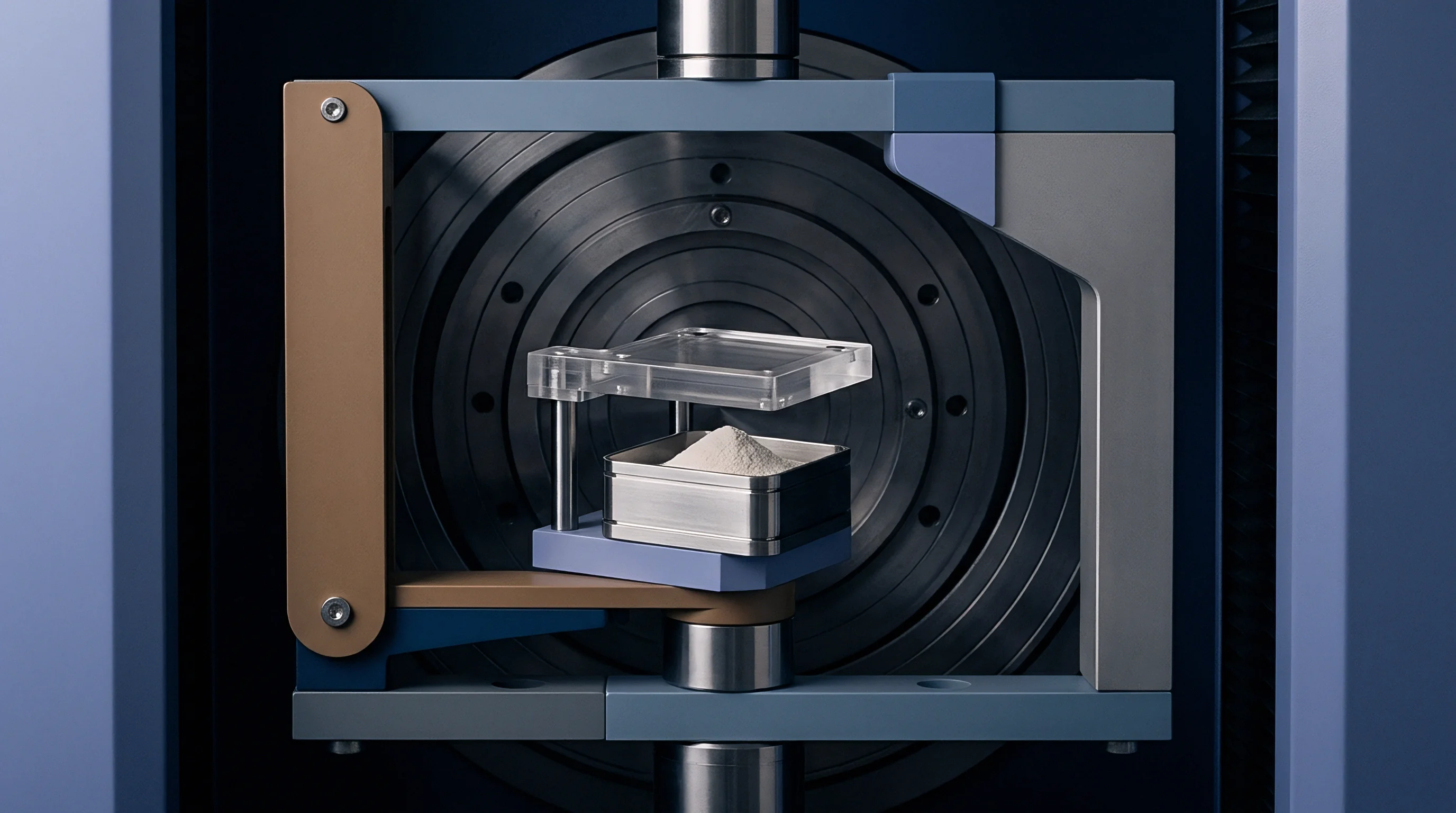
Transient extensional viscosity measurements quantify the resistance of a polymer melt to continuous stretching. Measured on a Sentmanat Extensional Rheometer or a rotational fixture at fixed Hencky strain rates, the extensional viscosity growth curve matches the linear viscoelastic envelope at low strains. As deformation proceeds, polymers with specific molecular architectures display a sudden upward deviation from this linear response.
This deviation represents strain hardening.
Biaxial extension dominates deep sheet draw. The Trouton ratio provides a non-dimensional baseline for evaluating this property. It compares transient extensional viscosity to zero-shear viscosity at equivalent times.
For Newtonian fluids, the Trouton ratio equals three in uniaxial extension and six in planar extension. Polymeric melts with significant long-chain branching exhibit Trouton ratios exceeding twenty at high Hencky strains.
A Trouton ratio exceeding four at a Hencky strain of two indicates sufficient extensional strain hardening to suppress localized necking during rapid plug-assisted deep-draw forming.
Long-chain branching generates molecular entanglements that resist rapid uncoiling under tensile stress. When a localized region of a heated polymer sheet thins, the local strain rate increases. In a material possessing strong strain hardening rheology, this elevated strain rate triggers an immediate increase in extensional viscosity.
The thinned area stiffens mechanically, transferring subsequent deformation to adjacent, thicker sections of the sheet. This strain-induced self-stabilization yields uniform wall thickness across complex tool geometries.
Measuring these properties requires dedicated rotational fixtures or counter-rotating windup drums operating inside environmental chambers. Cogswell entrance pressure drop analysis using capillary rheometers supplies an indirect approximation, but direct extensional rheometry provides the precise stress-strain tracking needed for window modeling.

Quantitative Rheological Metrics for Melt Deformation
Quantifying strain hardening involves calculated parameters derived from transient extensional rheograms. The strain hardening index compares the peak measured transient extensional viscosity to the linear viscoelastic limit at a specified Hencky strain. High-melt-strength polypropylene grades typically achieve strain hardening index values between 2.5 and 5.0, whereas standard linear polypropylenes hover near 1.0.
- Strain Hardening Index defines the quantitative ratio between nonlinear extensional viscosity and the base linear viscoelastic growth curve evaluated at fixed strain rates.
- Trouton Ratio Peak measures the maximum ratio of transient extensional viscosity to dynamic shear viscosity across operational Hencky strain thresholds.
- Critical Hencky Strain identifies the exact deformation level where non-linear stress accumulation initiates within the stretched polymer sheet.
- Melt Tensile Strength records the maximum force sustained by a molten filament drawn at constant acceleration until physical rupture occurs.
Selecting resins based purely on shear flow data leads directly to variable wall distributions and elevated reject rates on the production floor. The table below outlines how rheological metrics correlate with physical deformation during sheet forming across major resin families.
| Polymer Family | Molecular Architecture | Strain Hardening Index | Max Trouton Ratio | Achievable Draw Ratio |
|---|---|---|---|---|
| Standard Linear PP | Linear, Narrow MWD | 1.0 to 1.2 | 3.1 to 3.5 | 1.2:1 |
| High-Melt-Strength PP | Long-Chain Branched | 3.0 to 5.2 | 12.0 to 22.0 | 3.0:1 |
| Amorphous PETG | Linear Chain Structure | 1.1 to 1.4 | 3.2 to 4.0 | 1.5:1 |
| Branched Polycarbonate | Branched Carbonate | 2.1 to 3.4 | 8.5 to 14.0 | 2.4:1 |
| High-Impact Polystyrene | Graft Copolymer Matrix | 1.8 to 2.6 | 6.0 to 9.5 | 2.0:1 |
Inadequate strain hardening causes thin corners, structural web formation, and tool blowout, which forces engineers to increase starting sheet gauge, adding unrecoverable material cost to every produced part.


Sag
Preheating plastic sheet stock inside infrared oven banks reduces material yield stress prior to mechanical shaping. Gravity exerts continuous downward force on the softened plastic during this thermal cycle. The unconstrained sheet hangs between chain rails, forming a catenary displacement profile.
Excessive droop causes uneven distance to upper and lower heater elements, creating localized thermal hot spots that degrade the polymer structure.

Thermal Softening and Catenary Deflection
Zero-shear viscosity and low-frequency storage modulus govern catenary deformation while the sheet rests inside the heating station. Infrared radiation transfers energy into the polymer, driving the core temperature past the glass transition temperature for amorphous resins or past the melting point for semi-crystalline matrices. As thermal energy disrupts intermolecular forces, storage modulus drops by several orders of magnitude.
Extensional thickeners maintain uniform sheet tension under radiant infrared heating elements without increasing low-shear melt viscosity inside the sheet extrusion die.
High zero-shear viscosity retards initial gravitational displacement, but thermal soaking eventually destabilizes unbranched polymers. Long-chain branching introduces high elasticity at low deformation frequencies. This elastic recoil holds the sheet horizontal during extended heating dwell times, providing a stable sheet geometry before the vacuum stroke begins.
Optical sag sensors track this lower boundary, triggering mechanical sheet re-tensioning pulses or accelerating cycle timing when displacement breaches defined spatial thresholds.

Interplay between Heating Dynamics and Gravity
Sheet thickness variations compound heating disparities across large multi-zone ovens. Radiant intensity alters outer layer temperature rapidly, while heat conduction transfers energy toward the core. If the core remains cold while surfaces reach peak processing temperatures, the sheet exhibits non-uniform extensional resistance during plug contact.
Infrared heaters warm sheet surfaces rapidly. Radiant heater zone adjustment balances core heat penetration against catenary sagging rates. When processing heavy-gauge sheets above four millimeters, dual-sided ceramic or quartz heating panels maintain tight vertical temperature gradients.
Resin formulations lacking extensional thickening force operators to shorten heating cycles, producing cold sheet cores that strain plug assist drive motors and stress aluminum tooling cavities.
Material suppliers frequently claim that low melt flow index resins completely eliminate sagging issues during sheet preheating. That assertion ignores the physical distinction between shear resistance inside an extruder barrel and elastic recovery in an unconstrained heated sheet. Heavy-gauge sheets extruded from low-shear-viscosity resins with broad molecular weight distributions still suffer severe gravitational droop if the polymer chains lack long-chain branching architectures.


Envelope
Operating boundaries for thermoforming machinery rely on establishing a reliable processing window. This window defines the precise intersection of sheet surface temperature, core temperature gradient, Hencky strain rate, plug speed, and vacuum application timing. Resins with distinct strain hardening rheology broaden these operational limits, allowing stable production despite normal ambient shop floor shifts and minor material lot variations.

Process Boundary Mapping
Establishing the operating window requires systemic variation of sheet temperature and mechanical deformation rates. Lower processing limits are defined by high yield stress, sheet tearing, and incomplete mold detail reproduction. Upper processing limits are bounded by thermal degradation, surface webbing, and excessive gravitational catenary droop.
Sheet temperature non-uniformity across a multi-zone oven contracts the valid strain rate window faster than changes in pneumatic vacuum speed.
Extensional strain hardening broadens the upper thermal boundary by preserving melt strength at elevated temperatures. Operators can run sheets hotter without risking thin-corner punctures, facilitating better surface replication of fine mold textures. Plug speed adjustments fine-tune local strain rates to match the peak strain hardening response of the resin grade.
| Process Variable | Standard Material Limit | Strain Hardened Material Limit | Operational Impact |
|---|---|---|---|
| Sheet Temperature Window | 145°C to 158°C | 140°C to 175°C | Broadens thermal processing range by 20°C |
| Maximum Strain Rate | 4.0 s⁻¹ | 18.0 s⁻¹ | Enables faster plug assist speeds |
| Vacuum Delay Window | 0.2 to 0.5 s | 0.1 to 1.8 s | Prevents premature localized sheet necking |
| Maximum Draw Ratio | 1.5:1 | 3.2:1 | Allows deeper mold geometries without webbing |
Does Extensional Strain Rate Control Sheet Webbing?
Webbing occurs when excess sheet material folds over itself between tight tool features or deep adjacent mold cavities. When a plug assist advances into a sheet, it stretches the plastic uniaxially and biaxially into internal radii. If the polymer exhibits linear extension, material flows preferentially from the unconstrained zones, creating loose bridging folds.
Higher strain rates during plug entry activate strain hardening mechanisms in modified resin architectures. Elevated extensional strain rates force the melt to stiffen dynamically during fast deformation, pulling material uniformly from high-volume reserves rather than creating localized gather lines. Tailoring plug displacement speed directly alters the operational strain rate, matching the rheological amplification point of the polymer.
Establishing Process Window Parameters
- Mount the target sheet stock into the clamping frame and adjust pneumatic edge pressure to eliminate slippage during deep draw conditions.
- Expose the sheet to multi-zone infrared radiant heating while monitoring top and bottom surface thermal profiles with calibrated pyrometers.
- Measure vertical catenary droop continuously using non-contact optical displacement sensors to log zero-shear gravitational resistance.
- Advance the mechanical plug assist tool at controlled velocities ranging from 100 millimeters per second to 800 millimeters per second to control local Hencky strain rate.
- Apply differential vacuum pressure at incremental steps between 0.4 bar and 0.95 bar to complete corner radius conformity.
- Inspect cross-sectioned molded components across five standardized measurement points to chart wall thickness uniformity against process settings.
Process optimization studies raise questions regarding how long-chain branch structures degrade across multiple extrusion regrind cycles. Thermal and mechanical shear stress experienced during reclaim grinding cleaves tertiary carbon branches, progressively shifting the melt rheology back toward linear behavior. The threshold regrind ratio where strain hardening drops below the critical stabilization level remains a variable that sheet extruders must quantify for each resin system.


Gauging
Verifying wall thickness distribution across deep-draw thermoformed components confirms process window stability. Standard destructive sectioning uses optical micrometers, while non-destructive metrology relies on ultrasonic pulse-echo transducers or magnetic hall-effect sensors. Thin corners, heavy floors, and side-wall streaking indicate improper matching between tool kinetics and melt extensional behavior.

Wall Thickness Uniformity Stack-up
Strain hardening metrics directly influence the final material distribution profile. During initial sheet contact with a cool plug assist tool, contact friction and localized thermal chilling freeze the plastic layer. Subsequent mechanical advancement stretches the remaining un-chilled sheet areas.
Without strain hardening, this secondary deformation concentrates entirely within narrow thermal transition zones, generating severe wall thickness steps.
Corner wall thickness variations cause regional warp. When strain hardening resins are deployed, stretched areas resist localized necking, forcing un-stretched adjacent zones to yield. This produces smooth thickness transitions across deep draws.
Dimensional tolerance compliance under international standards rests entirely upon maintaining structural uniformity across these transition zones.

Defect Modes Driven by Rheological Imbalance
Incorrect extensional behavior introduces characteristic structural defects into finished thermoformed parts. Identifying these defects allows press setters to diagnose resin or thermal root causes accurately.
- Corner Blowout Rupture manifests when local Hencky strain exceeds material tensile failure limits due to insufficient extensional strain hardening during rapid inflation.
- Localized Web Folds occur when low extensional viscosity allows loose sheet material to bridge adjacent mold projections before vacuum application.
- Side-Wall Banding arises from stick-slip friction paired with inconsistent strain-hardening yield response across localized thermal gradients.
- Base Stagnation Thickening leaves excessive, un-stretched mass in the part floor while adjacent vertical walls suffer extreme thinning.
According to DIN 16742 Tolerance Group TG4, cross-sectional wall variation across deep-draw technical components must remain within tight percentage bands relative to nominal thickness. Standard contract specifications dictate that when resin lots fall below specified strain hardening limits, the sheet extrusion supplier assumes financial responsibility for non-conforming part geometries and lost machine capacity.
DIN 16742 Tolerance Group TG4 limits cross-sectional wall thickness variation to plus or minus eight percent across deep-draw corners when strain hardening metrics are verified prior to production sheet extrusion.

Yield
Selecting resin formulations based on extensional rheology metrics directly impacts sheet extrusion and thermoforming production economics. High-melt-strength resin variants carry a price premium over standard linear commodities. That initial material cost delta is recovered through reduced starting sheet thickness, shortened heating cycles, lower scrap rates, and improved regrind absorption capacity.

Material Amortization and Cycle Economics
Decreasing nominal starting sheet gauge while maintaining minimum structural corner thickness generates significant raw material savings over long production runs. Because strain hardening stabilizes deep drawing, a thinner initial sheet can yield the required structural strength at critical corner radii. Thinner sheets absorb thermal energy faster inside radiant ovens, reducing heating dwell times and accelerating total cycle rates.
Consider a high-volume packaging operation producing heavy-gauge structural containers. The baseline process uses a 4.0 millimeter standard linear polypropylene sheet. Transitioning to a long-chain branched high-melt-strength polypropylene grade allows the engine team to down-gauge starting sheet thickness to 3.2 millimeters while meeting identical structural drop-impact and corner wall specifications.
| Cost and Performance Parameter | Standard Linear PP | High-Melt-Strength PP | Net Operational Variance |
|---|---|---|---|
| Starting Sheet Gauge | 4.00 mm | 3.20 mm | 20.0% reduction in mass |
| Resin Material Cost per kg | $1.65 | $2.05 | 24.2% resin cost premium |
| Part Mass (500x500mm sheet) | 905 grams | 724 grams | 181 grams saved per unit |
| Oven Heating Time | 28.5 seconds | 21.0 seconds | 26.3% cycle time reduction |
| Scrap Rate (Webbing/Rupture) | 6.2% | 0.8% | 87.1% reduction in scrap |
| Net Part Cost at 100,000 Units | $2.12 per unit | $1.84 per unit | $28,000 net cost reduction |
Material selection fixes the scrap baseline. Regrind additions depress strain hardening metrics, making strict lot testing necessary before blending reclaimed material into virgin sheet extrusion streams. Down-gauging sheet thickness yields substantial economic returns that offset initial resin premiums within short production volumes.
High extensional strain hardening polymer grades expand thermoforming process windows, enabling stable high-speed production while suppressing localized wall thinning across deep cavity tool geometries.