
Preventing Mechanical Ink Set off Contamination in Converted Flexible Packaging Web Stock
Prevent mechanical ink set-off in flexible web stock by matching tension taper curves to core pressure limits and verifying cure thresholds.
Prevent mechanical ink set-off in flexible web stock by matching tension taper curves to core pressure limits and verifying cure thresholds.

Standardizing toxicological thresholds for unidentified photoinitiator degradants requires untargeted HRMS screening tied to strict TTC exposure caps.

Validating GC-MS workflows for postconsumer polyolefin migrants requires matrix-matched calibration, accurate mass deconvolution, and response-factor adjusted screening.

Screening benzophenone in recycled polyolefin resins requires solvent extraction, GC-MS/MS quantification, and diffusion modeling to prove migration safety.
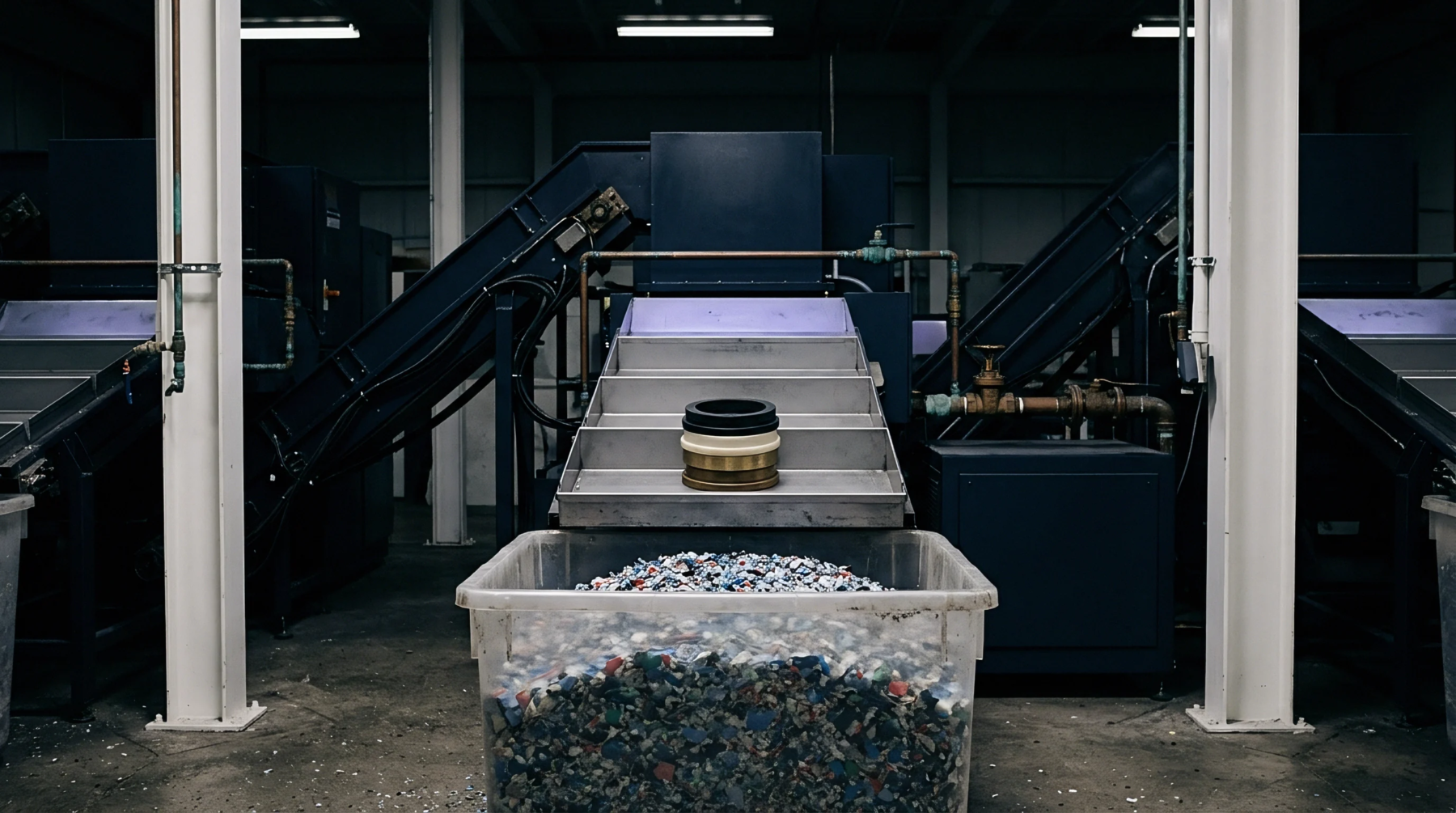
Surrogate selection for polyolefin challenge testing requires five distinct volatility and polarity classes to validate core matrix decontamination.
Mathematical peak deconvolution separates coeluting volatile degradation products from polyolefin oligomer baselines, enabling accurate resin qualification.

Quantitation of UV ink breakdown fragments in recycled films demands target GC-MS/LC-MS extraction paired with non-target screening for degradation products.
Quantifying photoinitiator migration in polyolefin stacks requires coupled Fickian diffusion modeling and LC-MS/MS verification to control set-off and trans-barrier flux.
Verify photoinitiator compliance in recycled HDPE via GC-MS/MS extraction and ten-day migration testing under 10 ppb thresholds before signing declarations.

High vacuum twin screw devolatilization of rPET removes VOCs down to food contact limits by maximizing melt surface renewal at sub millibar pressures.

Recycled polyolefin food contact compliance demands targeted screening for photoinitiators to prevent set-off contaminants from exceeding specific migration limits.

Quantifying photoinitiator residues in recycled polyolefins demands solvent extraction and mass spectrometry to verify migration limits under European food contact rules.

Quantifying semi-volatile photoinitiators in recycled polyolefins requires matrix-matched standard addition to counter 40% measurement uncertainty.

Managing recycled plastic compliance under EU waste rules requires challenge-tested decontamination, accredited migration testing, and audited traceability dossiers.

Groundwork for identifying non-intentionally added photoinitiators in polyolefins requires high-resolution mass spectrometry and toxicological screening.

Non-target mass spectrometry combined with toxicological threshold evaluation verifies that recycled plastic packaging meets mandatory food-contact safety limits.
Expertise is a utility, not a secret. sentiention™ publishes its working knowledge as open reference: intelligence layer covering the materials it sources, the markets it enters, and the reference that serves both.