Meaning
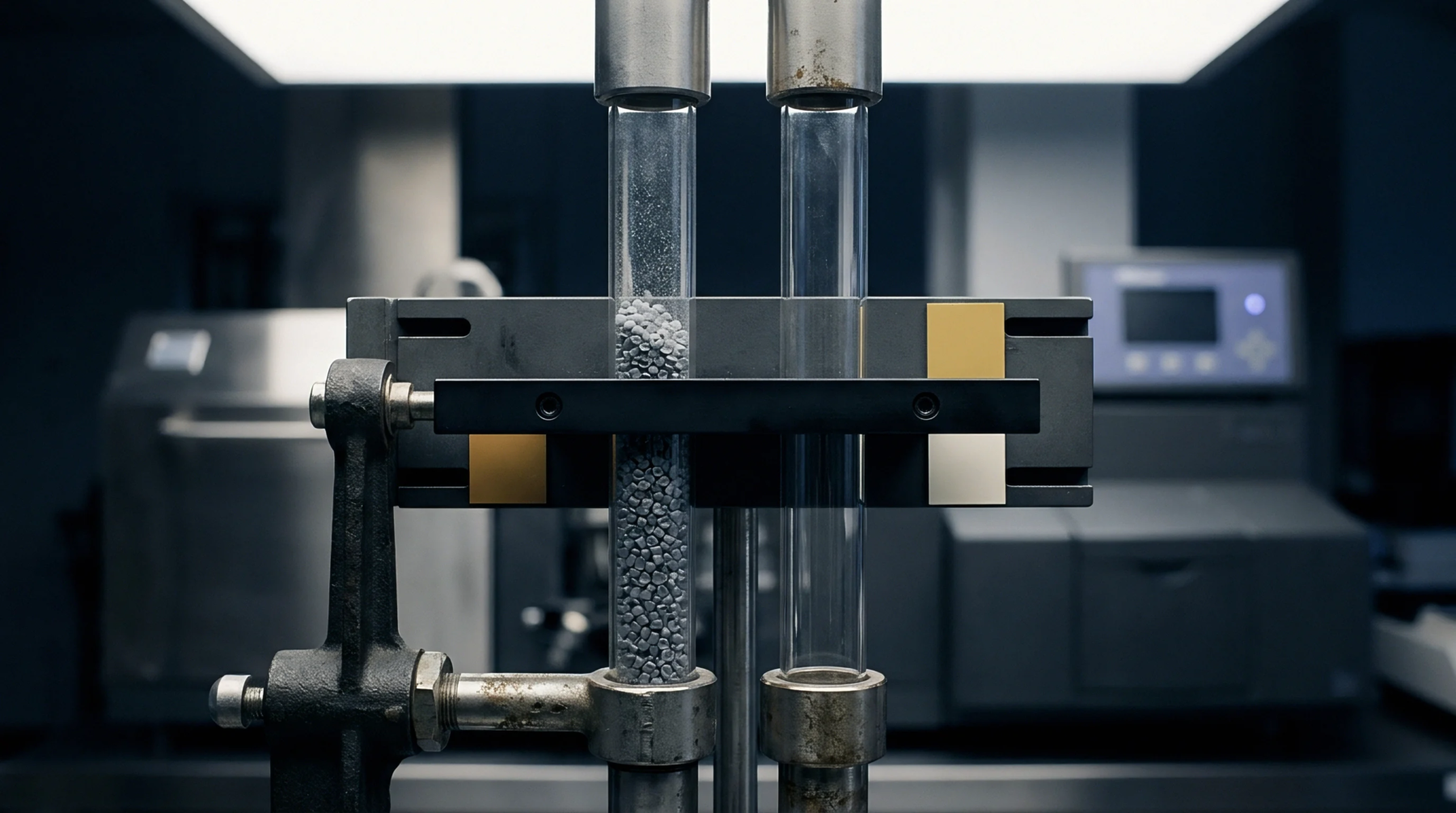
Particle reduction performance denotes the proportion of contaminants removed from a polymer stream during the reclamation of industrial or post-consumer plastics. Decontamination efficiency quantifies the capability of a wash line or extrusion venting system to strip volatile organic compounds and surface impurities from a raw material batch. It calculates the mass of isolated hazardous residuals relative to the total initial loading.
The metric applies only to the physical removal of constituents that interfere with melt stability or finished part safety. Performance assessment relies on comparing concentration levels before and after processing through gas chromatography. This indicator establishes the baseline purity of feedstocks for food-grade packaging applications where migration limits apply strictly to final components.
Process Cleanliness
Washing operations determine the final purity of a polymer before heat induction occurs. Decontamination efficiency monitors the throughput of detergent baths and friction scrubbers against the total surface area of shredded feedstocks. Variations in feed material geometry alter the contact time required to strip stubborn adhesives or ink residues.
Higher purity settings increase the residence time of flakes within caustic solutions, which reduces the total output volume of an active production line. Managers evaluate this result against the maximum contaminant levels permitted by regional health authorities for direct contact containers. When machine settings allow for lower impurity levels, the resulting resin grade command higher market values due to reduced downstream filtration requirements.
Recyclers verify this level by measuring the volatile content of extrudates versus the raw intake of unwashed scraps.
Resin Specification
Material properties depend upon the thoroughness of the washing phase during the manufacturing cycle. Decontamination efficiency establishes the compatibility of regrind with virgin pellets by ensuring that hazardous inclusions stay below threshold limits for molecular weight degradation. The value assigned to a batch differentiates a general-purpose plastic grade from one approved for sensitive technical applications.
Part failures frequently arise from the accumulation of moisture or trace solvent residues that volatilize inside the barrel during moulding. These bubbles induce internal stress that lowers the structural integrity of the injection moulded component under tension. Producers hold this variable constant across a production run to guarantee that the final article meets rigid safety standards for chemical resistance.
A deviation in this score indicates that the reclamation unit requires mechanical adjustment to restore desired quality benchmarks.
Tooling Economics
Moulding productivity suffers when contaminated regrind introduces foreign particles into the injection unit. Decontamination efficiency governs the frequency of tool maintenance by controlling the rate of material degradation that leaves deposits on polished cavity surfaces. Incomplete removal of impurities causes an abrasive effect inside the feed throat, which wears down hardened steel components over repeated cycles.
Lower levels of residual contaminants extend the interval between expensive tool cleaning operations and prevent premature gate blockage during high-speed runs. Profitability decreases when a production facility processes dirty feedstock, as the increased frequency of machine downtime negates any savings realized from cheap secondary material. Stable performance at the washing stage ensures that capital equipment maintains a consistent operational state over the lifespan of a specific moulding project.