Analytical Metrology and Restabilization Procedures for Post-Consumer Flake
Stabilizing post-consumer flake requires baseline infrared oxidation metrology paired with balanced phenolic-phosphite packages to prevent melt chain scission.
Intake
Incoming flake lots present immediate mechanical processing risks well before an extruder screw ever contacts the resin. Shredded bales from municipal recovery plants arrive with variable bulk densities, fluctuating surface cleanliness, and irregular particulate geometries that disrupt gravimetric feed throats. Checking bulk density via ASTM D1895 Method A sets the volumetric baseline for hopper fill rates.
Compacted bottle flake typically reaches 0.35 to 0.45 grams per cubic centimeter, whereas thermoform flake packs loosely and yields values below 0.25 grams per cubic centimeter, directly undermining feed stability.
Surface moisture triggers severe molecular weight reduction in polycondensates such as polyethylene terephthalate through rapid ester cleavage. At 280 degrees Celsius, hydrolytic degradation snaps long ester chains within forty seconds of screw transit, dropping intrinsic viscosity below commercial blow-moulding thresholds. Polyolefins handle surface water better, but residual wash liquid carrying alkaline detergents deposits sodium hydroxide and surfactant salts on the polymer surface.
These ionic contaminants catalyze auto-oxidation in barrel entry zones, consuming process stabilizers before additive melt dispersion occurs.
Wash residues accelerate thermal cleavage at the throat long before polymer reaches the metering zone.
Incoming inspection protocols segregate lots based on verifiable physical metrics before allocating material to silo storage. Laboratory technicians execute five mandatory intake determinations across every delivery.
- Bulk density determination verifies volumetric dosing consistency to prevent starve feeding inside the single or twin screw intake zone.
- Moisture titration via Karl Fischer identifies whether flake water volume demands desiccant drying or extended vacuum degassing down to target levels under fifty parts per million for condensation resins.
- Elutriation fines classification isolates light dust under five hundred microns that scorches on barrel surfaces and causes black specks in final injection parts.
- Colorimetric flake sort evaluation detects unwashed label adhesives, clear polyvinyl chloride flakes, and residual metal shavings through caustic hot wash immersion tests.
Sourcing desks frequently contend with unwashed fines and dirt disguised as dry tare weight. Reclaimers often report moisture content strictly as total volatile loss under mild oven drying, on the assumption that residual wash chemicals act like inert surface water in processing barrels.

Spectroscopy
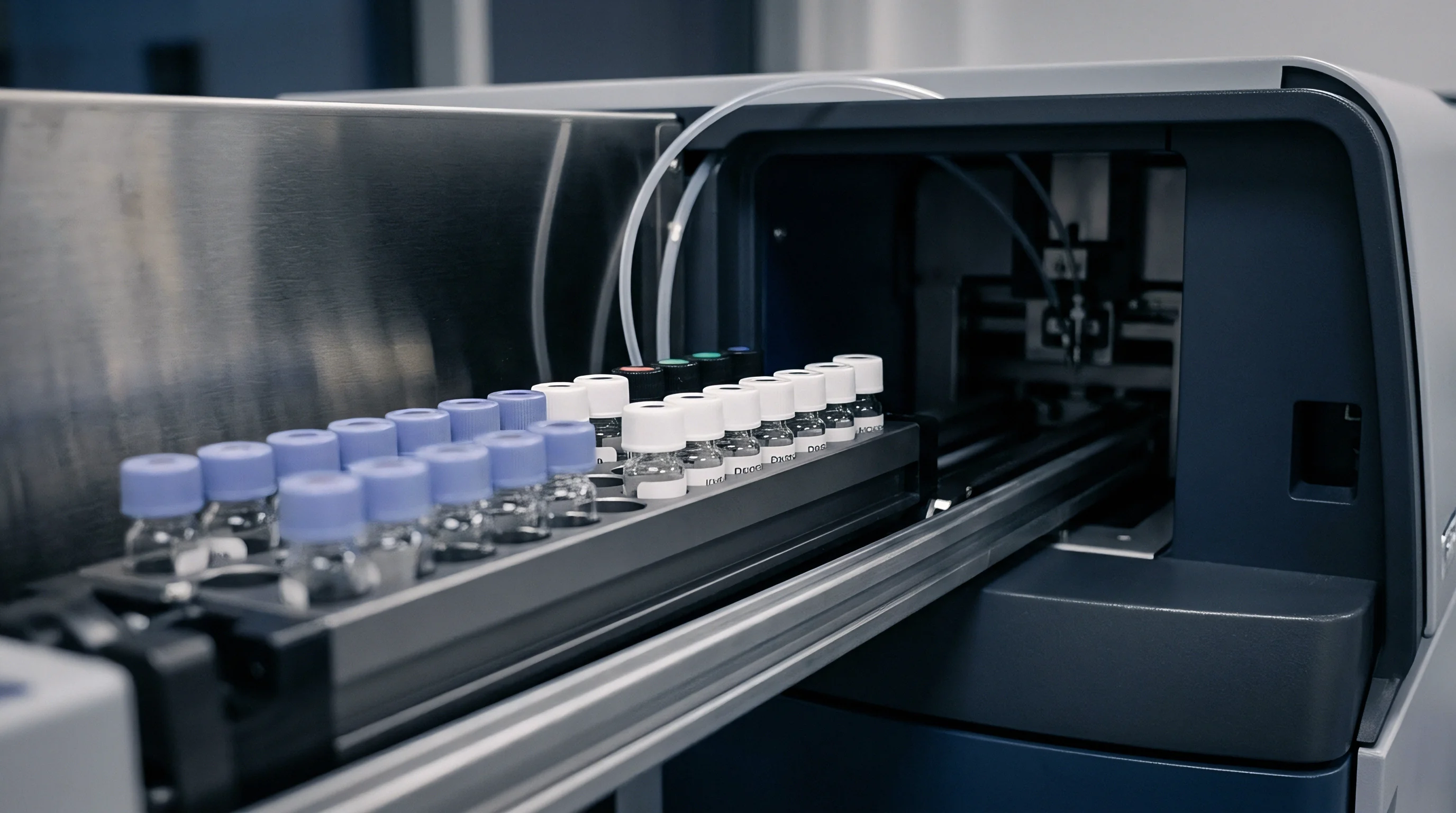
Infrared analysis identifies chain degradation stages and cross-polymer contamination before compounding trials consume operational hours. Attenuated total reflectance Fourier-transform infrared spectroscopy maps surface functional groups between 400 and 4000 reciprocal centimeters. Oxidation shows up in distinct absorbance bands: the carbonyl region spanning 1710 to 1740 reciprocal centimeters exposes carboxylic acids, ketones, and aldehydes formed during atmospheric weathering and post-consumer handling.
Calculating the carbonyl index against reference bands at 1377 reciprocal centimeters for polypropylene or 1462 reciprocal centimeters for polyethylene quantifies this legacy oxidative damage.
Polyvinyl chloride contamination inside clear polyethylene terephthalate flake remains an acute processing hazard. Transmission infrared scans detect carbon-chlorine stretching vibrations at 615 and 690 reciprocal centimeters. As little as fifty parts per million of vinyl material releases hydrogen chloride gas at 260 degrees Celsius, triggering accelerated polycondensation chain scission, yellowing the melt, and corroding compounding screw flights.
Differential scanning calorimetry complements optical spectroscopy by evaluating oxidation induction time under oxygen flow at 200 degrees Celsius according to ISO 11357-6. Virgin high-density polyethylene maintains oxidation stability beyond forty minutes, whereas degraded post-consumer blow-moulding flake often drops to zero minutes ~ reflecting total primary antioxidant exhaustion.
Clean polyolefin spectra showing flat carbonyl bands consistently outlive unstable material on heated tools.
Gas chromatography coupled with mass spectrometry isolates volatile organic compounds trapped within the polymer matrix. Odor compounds like limonene, pinene, and aliphatic degradation by-products desorb under thermal extraction at 120 degrees Celsius, exposing past contact with cosmetic fragrances, agrochemicals, or household detergents.
| Metrological Target | Analytical Method | Calibration Standard | Quantification Limit | Processing Rejection Limit |
|---|---|---|---|---|
| Polyvinyl Chloride in rPET | ATR-FTIR / Caustic Dip | ASTM D5991 | 10 mg/kg | 50 mg/kg |
| Carbonyl Oxidation Index | Transmission FTIR | ISO 10640 | 0.02 index value | 0.15 index value |
| Oxidation Induction Time | Isothermal DSC @ 200 C | ISO 11357-6 | 0.5 minutes | Under 5.0 minutes |
| Residual Limonene Volatiles | Headspace GC-MS | DIN EN 15344 | 0.1 mg/kg | 2.5 mg/kg |
| Polypropylene in rPE Flake | DSC Melting Enthalpy | ISO 3146 | 0.2 percent by weight | 2.0 percent by weight |
Determining baseline thermal stability informs compounding engineers whether a lot requires sacrificial stabilizer masterbatches or secondary solid-state post-condensation, particularly since optical sorters miss clear vinyl fragments.
Whether infrared absorbance indices alone can reliably predict long-term stress-crack resistance in finished blow-moulded packaging remains an ongoing debate among recycling polymer scientists.
Antioxidant
Restabilizing post-consumer flakes demands chemically matched additive systems that intercept radicals during high-temperature remelting. Thermal stress in an extruder barrel converts alkyl radicals into peroxy radicals in the presence of entrained atmospheric oxygen. When hydroperoxides split during early heating, unchecked radical cascades pull hydrogen atoms from the polymer backbone ~ accelerating cross-linking in polyethylene or chain scission in polypropylene.
Without stabilizers, polyolefins degrade rapidly on a second pass.
Formulations balance sterically hindered phenolic antioxidants with secondary organophosphites. Phenols scavenge peroxy radicals by donating active phenolic hydrogen atoms, forming resonance-stabilized phenoxy radicals that leave aliphatic carbon bonds untouched behind their steric hindrance. Secondary phosphites, including tris(2,4-di-tert-butylphenyl) phosphite, reduce reactive hydroperoxides into non-radical alcohols while oxidizing the additive molecule to phosphate.
Because phosphites decompose in damp air, hydroxylamines or amine oxides act as secondary radical traps across low-temperature cooling zones, while acid scavengers neutralize catalyst residues.
Phenolic antioxidants dosed at 0.15 weight percent preserve mechanical retention when combined with equal phosphite fractions.
Compounding halls dose precise chemical suites based on incoming polymer species and targeted downstream converting processes.
- Primary hindered phenols donate hydrogen radicals to active peroxy chains during high-heat residence, halting degradation cycles.
- Secondary phosphite esters destroy hydroperoxides during barrel shear to preserve melt flow stability and prevent gel formation.
- Zinc and calcium stearates act as acid scavengers to neutralize chlorinated catalyst residues and volatile acidic wash remnants.
- Dialkyl hydroxylamines provide secondary radical termination to inhibit discoloration and stabilize high-melt-index polypropylene homopolymers.
- Epoxy-functionalized chain extenders reactivate truncated terminal groups in condensation polyesters, recovering melt strength for sheet extrusion.
Polyethylene terephthalate flake processing demands pyromellitic dianhydride or styrene-acrylate-glycidyl methacrylate copolymers rather than classic polyolefin stabilizers. These polyfunctional additives bond cleaved hydroxyl and carboxyl chain ends during reactive melt extrusion, elevating intrinsic viscosity from 0.65 deciliters per gram back to 0.80 deciliters per gram for direct sheet packaging applications.
| Resin Type | Baseline Flake MFI/IV | Target Compound Value | Stabilizer Package Chemistry | Dosing Level (wt%) |
|---|---|---|---|---|
| Post-Consumer rHDPE | 0.75 g/10 min (190 C, 2.16 kg) | 0.50 g/10 min (190 C, 2.16 kg) | Phenol / Phosphite / CaSt (1:2:1) | 0.35 percent |
| Post-Consumer rPP | 12.0 g/10 min (230 C, 2.16 kg) | 9.5 g/10 min (230 C, 2.16 kg) | Phenol / Phosphite / Hydroxylamine | 0.45 percent |
| Post-Consumer rLLDPE | 1.2 g/10 min (190 C, 2.16 kg) | 1.0 g/10 min (190 C, 2.16 kg) | Phenolic / Phosphite (1:1 blend) | 0.25 percent |
| Post-Consumer rPET | 0.68 dL/g intrinsic viscosity | 0.82 dL/g intrinsic viscosity | Epoxy Oligomeric Chain Extender | 0.60 percent |
Stabilizer addition levels balance raw material cost against additive solubility limits. Dosing past matrix solubility causes additive blooming, poor surface printability, and weld-line weakness during injection moulding.
Melt stability follows chemical compatibility rather than additive volume.
Screen
Molten polymer transport relies on progressive physical filtration and vacuum devolatilization inside co-rotating twin-screw extruders. Unmelted contaminants, paper labels, aluminium specks, and cross-linked silicone enter the barrel alongside flake. Continuous melt filtration separates these particulates through backflush screens or rotary disc screen changers, using mesh apertures from forty to two hundred mesh (400 microns down to 75 microns) as melt pressure rises steadily.
High screen differential pressures accelerate shear heating across the breaker plate, pushing localized melt temperatures above 300 degrees Celsius. This thermal spike destroys delicate phosphite stabilizers and triggers localized cross-linking. Compounders adjust screw speed and barrel temperature zones to control melt viscosity without degrading newly introduced additive packages.
Vacuum degassing systems running at negative pressures below twenty millibars extract entrapped water, print ink solvents, and degraded short-chain oligomers through vacuum ports before gel counts climb.
Optimizing the extrusion filtration train demands sequential control over thermal and mechanical parameters along the barrel.
- Throat zone cooling balances water flow between ten and fifteen degrees Celsius to prevent premature flake softening at the feed hopper entrance.
- Screw shear mitigation uses wide-pitch kneading blocks across the plasticization zone to minimize mechanical chain cleavage in degraded flake fractions.
- Stabilizer masterbatch dosing introduces liquid or pelletized additive packages downstream via side-feeders after initial polymer melting completes.
- Screen changer indexing monitors pressure differentials across the breaker plate, triggering continuous screen advance when delta pressure exceeds seventy bar.
Omitting proper screen indexing causes contaminant bypass, pinhole punctures in blown film extrusion, and catastrophic tool clogging in thin-wall packaging moulds.

Expense
Compounding economics depend on additive formulation expenses, mechanical filtration melt loss, and incoming flake purchase prices. Clean flake commands firm premiums. A sourcing desk buying natural post-consumer high-density polyethylene flake at 950 dollars per metric tonne must account for additive masterbatch costs, operational electrical loads, and continuous melt purge loss during screen filtration cycles.
Consider an operational compounding lot of forty metric tonnes of post-consumer polypropylene flake converted into high-impact injection pellets. Assume an incoming raw flake acquisition cost of 1,020 dollars per tonne. Introducing an antioxidant restabilization system at 0.40 weight percent adds 38 dollars per finished tonne, based on commercial specialty phosphite and hindered phenol pricing at 9.50 dollars per kilogram.
Color-correcting blue masterbatch and zinc stearate add 14 dollars per tonne. Extruder energy consumption across an 80-millimeter twin-screw line running at 500 kilograms per hour consumes 0.35 kilowatt-hours per kilogram, contributing 42 dollars per tonne at industrial power rates of twelve cents per kilowatt-hour. Continuous backflush screen filtration rejects 2.5 percent of the total melt stream as heavily contaminated purgings, shifting yield to 39 metric tonnes.
The lost material accounts for 26 dollars per delivered prime pellet tonne. Fixed labor, packaging bags, and logistics add 75 dollars per tonne. The net manufacturing cost reaches 1,215 dollars per prime compounded metric tonne before commercial margin.
Tolerating degraded, unstabilized flake destroys commercial margin downstream when injection moulders reject out-of-specification resin shipments. Tensile bars cast from inadequately stabilized flake exhibit elongation-at-break values dropping by fifty percent after thirty days of outdoor warehouse storage, as degraded polymer chains weaken part walls.
Commercial purchase contracts incorporating ASTM D7209 guidelines govern acceptable non-polymeric residue thresholds and mandate certified retention of melt flow index tolerances within ten percent across sequential railcar deliveries.