
Capillary Rheometry Corrections and Mooney Wall Slip Analysis for Polyolefin Blends
Capillary rheometry requires Bagley and Rabinowitsch-Weissenberg corrections alongside Mooney wall slip analysis to prevent polyolefin blend die miscalculations.
Capillary rheometry requires Bagley and Rabinowitsch-Weissenberg corrections alongside Mooney wall slip analysis to prevent polyolefin blend die miscalculations.

Standard melt flow index testing fails recycled polyolefins due to low-shear limits, thermal breakdown, and unmeasured pseudoplastic behavior.

Dual load testing at 2.16 kg and 21.6 kg enforces molecular weight distribution limits, preventing off-spec bimodal resin from entering extrusion lines.

Multi-tier polyolefin silo homogenization induces viscoelastic drift via thermal compaction and micro-shear, altering melt elasticity and wall thickness.

Polyolefin melt flow shifts reveal chain scission or crosslinking under repeated shear, requiring strict multi-point viscosity and antioxidant monitoring.

Verifying functional barrier integrity in recycled polymers requires surrogate challenge testing, Fickian transport modeling, and precise lag time calculation.
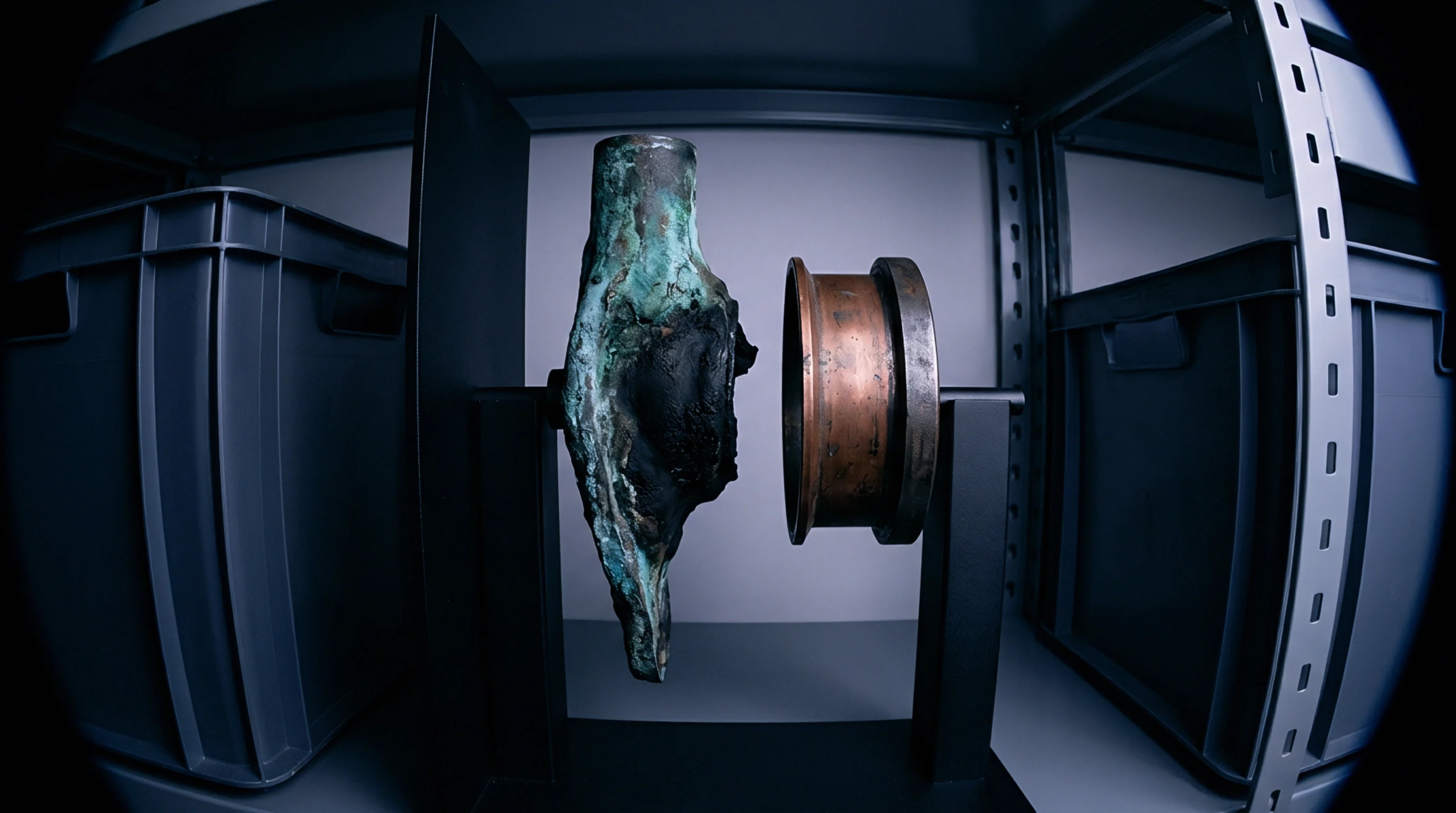
Mechanical recycling creates low-molecular-weight degradation products whose migration into food simulants requires batch verification and challenge-tested barriers.

Deconvolution of DSC melt crystallization peaks isolates PE and PP fractions in recyclates to verify composition before compounding.

Twin-bore capillary testing at 1,000 to 10,000 s⁻¹ qualifies high-strain regrind by isolating entrance losses, true wall slip, and elastic die swell shifts.

Melt flow rate thresholds for recycled polyolefin blends must be set using multi-load shear testing to bound contamination and prevent processing scrap.

Thermal and oxidative degradation alters polyolefin flake viscosity and residual stability, demanding MFR, OIT, and Carbonyl Index verification before processing.

Validating GC-MS workflows for postconsumer polyolefin migrants requires matrix-matched calibration, accurate mass deconvolution, and response-factor adjusted screening.

Decontaminated HDPE migration compliance relies on temperature-dependent Fickian diffusion models parameterized by matrix density and surrogate mass.
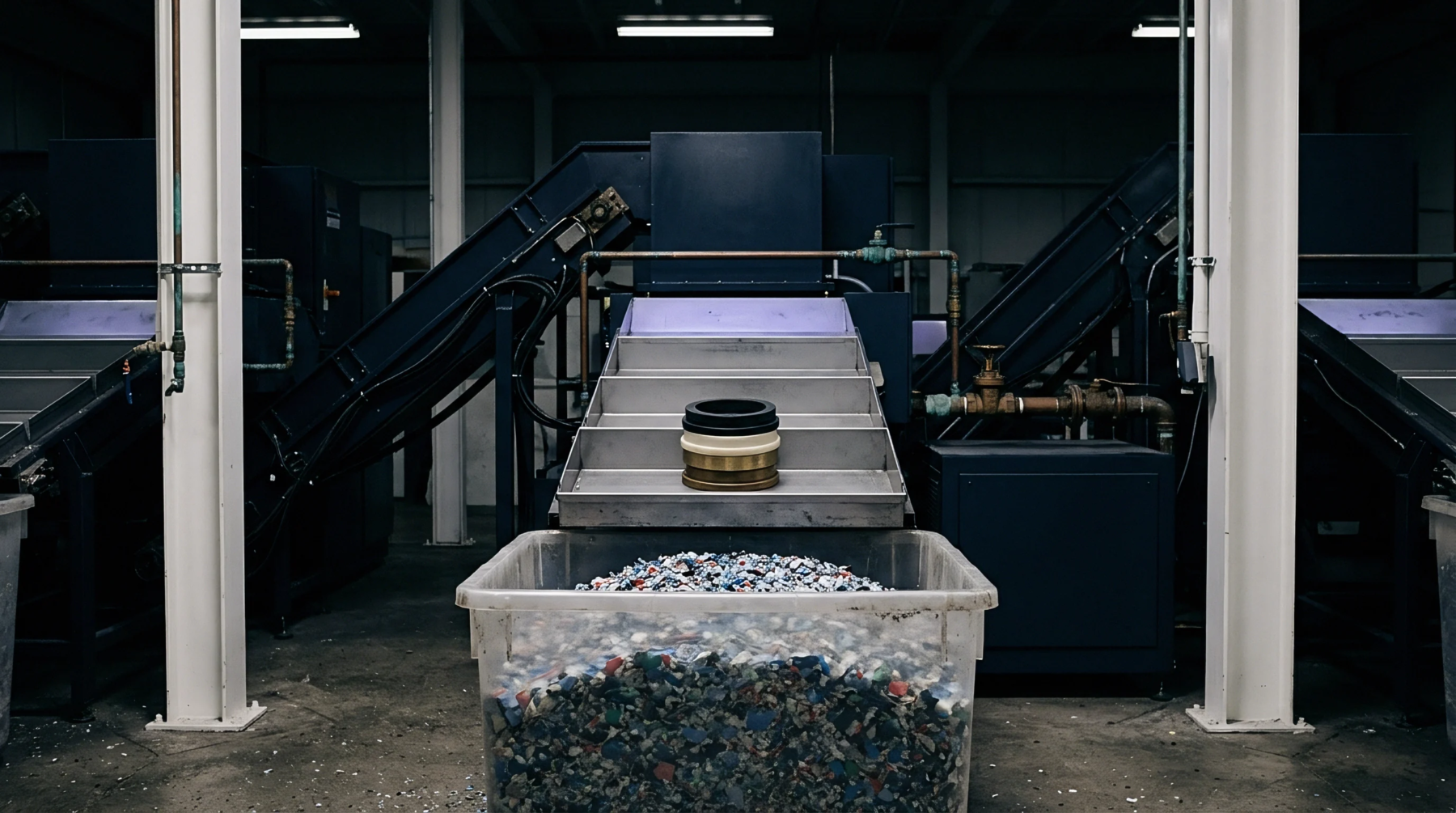
Surrogate selection for polyolefin challenge testing requires five distinct volatility and polarity classes to validate core matrix decontamination.

Auditing converter food contact declarations requires cross-referencing batch test reports, simulant conditions, dual-use additives, and NIAS screening data.
Expertise is a utility, not a secret. sentiention™ publishes its working knowledge as open reference: intelligence layer covering the materials it sources, the markets it enters, and the reference that serves both.