Meaning
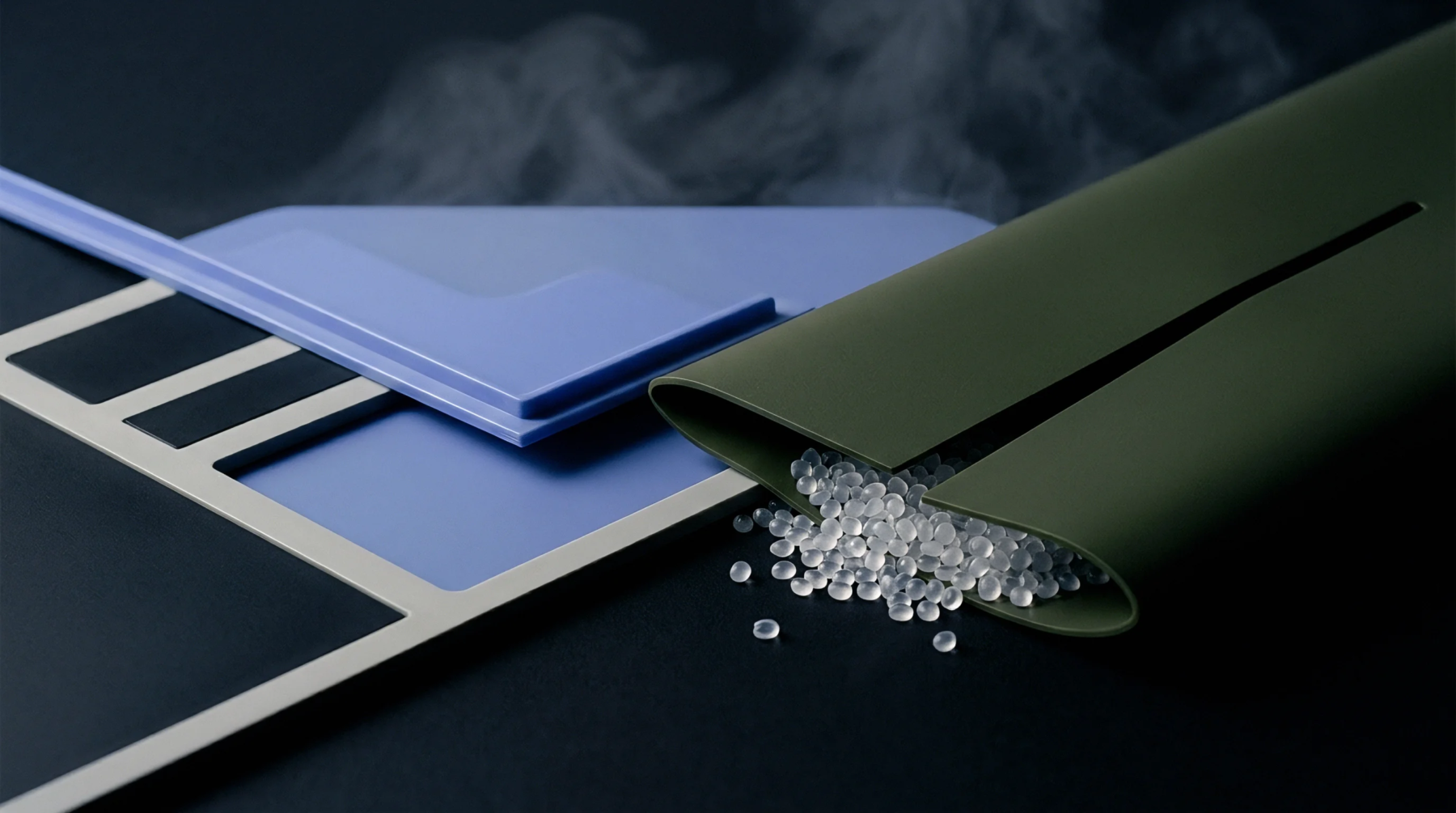
Bio-based aliphatic polyester synthesized from fermented plant starch sugars forms a rigid thermoplastic polymer widely utilized in compostable packaging and 3D printing filaments. Polylactic acid is produced via ring-opening polymerization of lactide dimers, yielding polymer chains built from repeating lactic acid units. In industrial conversion processes, the resin offers high tensile strength and stiffness comparable to polyethylene terephthalate, though lower heat deflection limits restrict un-modified grade applications.
Hydrolytic degradation under elevated humidity sets processing and storage boundaries, causing rapid molecular weight reduction if melt processing occurs above critical moisture thresholds.
Stereocomplex Mechanics
Enantiomeric ratios of poly-L-lactide and poly-D-lactide dictate crystal melting points and mechanical heat resistance. Blending pure L-lactide and D-lactide chains forms stereocomplex crystalline domains that elevate resin melting temperatures by over forty degrees Celsius. Control of optical purity during lactide monomer synthesis governs ultimate polymer crystallinity and rate of biodegradation.
Processing Sensitivity
Moisture levels above two hundred parts per million induce rapid chain scission during extrusion, dropping melt viscosity and impact strength. Desiccant drying of resin pellets prior to molding prevents thermal hydrolysis inside the injection barrel. Barrel temperature profiles must balance low melt viscosity against thermal degradation risk during long residence times.
Degradation Pathway
Industrial composting conditions above fifty-five degrees Celsius trigger multi-step ester cleavage, breaking long polymer chains into water-soluble oligomers. Microorganisms consume these lower molecular weight fragments, converting carbon back into carbon dioxide and biomass. Ambient landfill conditions lack required thermal and moisture levels, dramatically slowing natural breakdown rates.