Basic Technical Criteria for High Flow Polypropylene Homopolymer Selection
Select high flow polypropylene homopolymers by balancing melt flow rate against impact loss, verifying narrow molecular weight distribution and peroxide residues.

Viscosity
A melt flow rate of 60 grams per 10 minutes at 230 degrees Celsius under a 2.16-kilogram load marks the point where polymer chains disentangle rapidly under moderate injection pressures. Thin-wall packaging converters and compounders treat this threshold as the standard entry point for high flow polypropylene homopolymer capable of filling micro-cavities and parts with flow length to wall thickness ratios exceeding 250:1. That mobility comes with a direct mechanical penalty.
As average molecular weight drops to accelerate cavity filling, chain entanglements thin out, dragging impact toughness down and leaving parts prone to brittle fracture along molded-in weld lines.
Melt Mass Flow Rate Calibration Windows
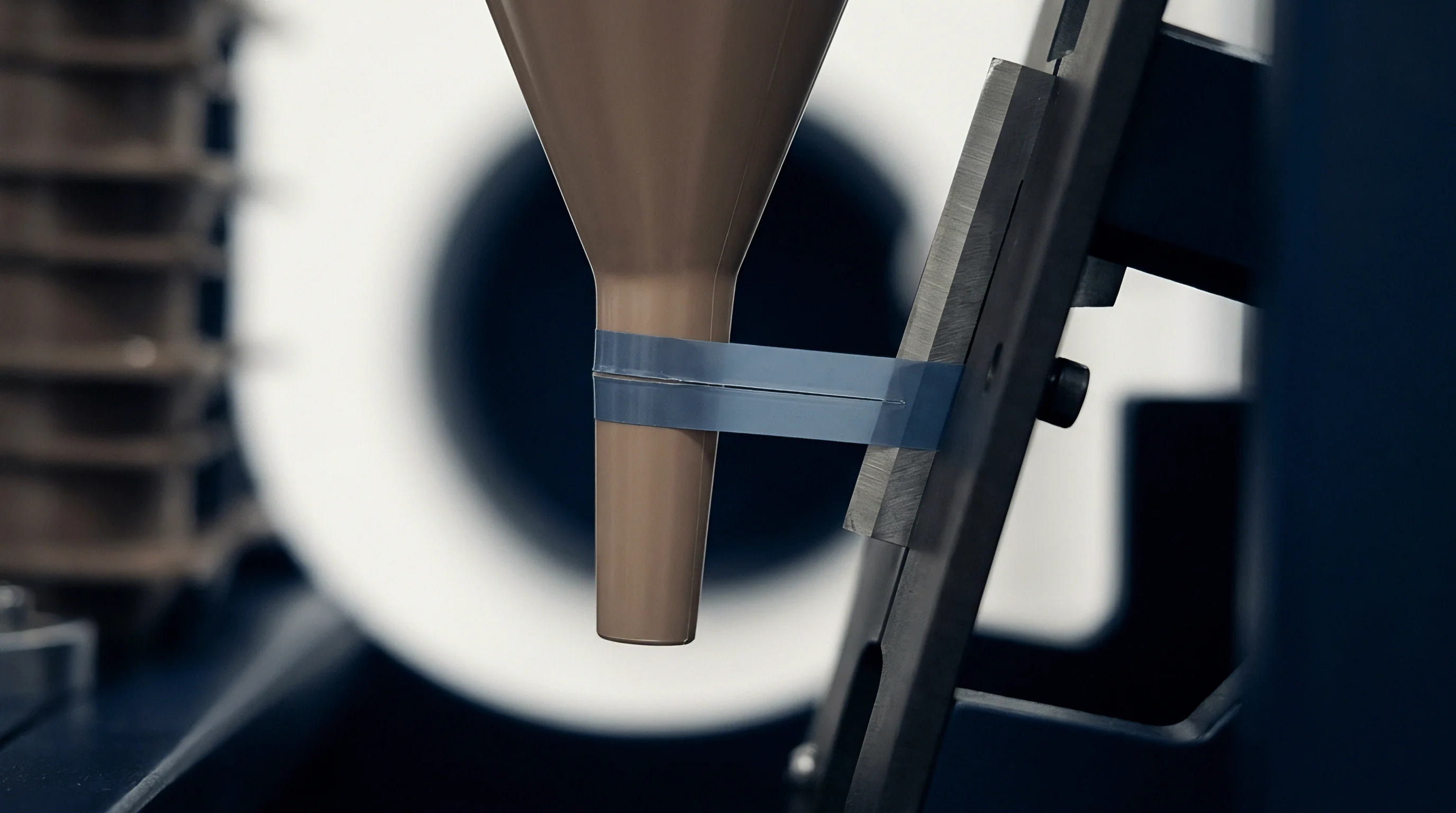
Capillary extrusion testing under ISO 1133 Procedure B requires tight thermal control along the barrel bore. Homopolymer grades are sensitive enough that a 1.5-degree Celsius shift inside the test cylinder alters the measured extrusion rate by roughly five percent. Sourcing engineers reviewing datasheets encounter nominal ratings spanning 25 to 120 grams per 10 minutes at 230 degrees Celsius under 2.16 kilograms.
Quoting flow without specifying both temperature and test load conveys zero usable data, since stepping up to a 5.0-kilogram weight pushes several times more melt through the standard 2.095-millimeter die orifice over the same cut interval.
While capillary testing under ASTM D1238 Condition 230/2.16 yields an equivalent mass displacement metric, manual cutting introduces timing errors between operators. Auto-timed optical displacement plastometers resolve this by tracking piston travel over calibrated distances. Incoming resin lots billed as nominal 45-flow on the certificate of analysis routinely land anywhere between 41 and 49 grams per 10 minutes.
That eight-unit window alters hydraulic cavity pressure during first-stage injection, shifting the transfer position on high-speed molding presses.

Molecular Weight Distribution and Shear Response
The polydispersity index of a Ziegler-Natta homopolymer determines how quickly apparent viscosity falls under aggressive screw displacement. Reactor grades taken directly from polymerization loops carry broad molecular weight distributions, with polydispersity ratios between 5.5 and 8.0. These wide distributions contain long molecular fractions that align under shear to provide melt strength.
Controlled rheology grades, modified downstream with organic peroxides, collapse this ratio toward 2.5 to 3.5, sacrificing melt elasticity in the process.
Pronounced shear thinning allows broad-distribution resins to pass through runner systems with less resistance before recovering viscosity inside cavity pockets. Narrow-distribution grades exhibit less shear thinning at identical nominal flow ratings. They maintain a flatter viscosity profile across the mold cavity, which narrows orientation differentials between the skin and core layers of the wall.
This uniform relaxation suppresses anisotropic shrinkage, lowering gross part warpage in square container geometries.
A standard polypropylene homopolymer possessing a melt flow rate of 65 grams per 10 minutes under 2.16 kilograms at 230 degrees Celsius exhibits a notched Izod impact energy below 2.0 kilojoules per square meter at 23 degrees Celsius.

Physical Tradeoffs in Mechanical Properties
Tensile modulus climbs as polymer chains pack into dense crystalline spherulites, but notched impact toughness plummets in roughly equal proportion. Standard homopolymer at 12 grams per 10 minutes yields an Izod impact strength between 3.0 and 4.0 kilojoules per square meter under ISO 180 at room temperature. Pushing the flow rating to 70 grams per 10 minutes drives that impact value down toward 1.5 to 1.8 kilojoules per square meter.
At freezing temperatures, homopolymer embrittles completely: impact resistance falls below 1.2 kilojoules per square meter at minus 20 degrees Celsius regardless of nucleating packages.
Published property portfolios frequently disguise this loss of toughness behind ideal test bar conditioning. A flexural modulus figure of 1,550 megapascals for an MFR 45 homopolymer under ISO 178 at 2 millimeters per minute rests on a 64-millimeter support span using injection-molded 4-millimeter-thick bars conditioned for 48 hours at 23 degrees Celsius and 50 percent relative humidity. That modulus value drops toward 1,380 megapascals if rapid tool cooling prevents full crystallization, or if testing runs at elevated strain rates.
Pigment masterbatches containing high levels of calcium carbonate or phthalocyanine blues alter crystalline nucleation kinetics, pulling flexural stiffness upward while degrading tensile elongation at break.
| Nominal Melt Flow Rate (g/10 min, 230 °C / 2.16 kg) | Polydispersity Index (Mw/Mn) | Flexural Modulus (ISO 178, MPa) | Tensile Strength At Yield (ISO 527, MPa) | Notched Izod Impact (ISO 180, kJ/m² at 23 °C) | Heat Deflection Temp (ISO 75-2, 0.45 MPa, °C) |
|---|---|---|---|---|---|
| 25 | 4.8 to 6.2 | 1,450 | 34.0 | 2.8 | 98 |
| 45 | 3.2 to 4.5 | 1,550 | 36.5 | 2.1 | 104 |
| 70 | 2.8 to 3.5 | 1,620 | 37.5 | 1.7 | 108 |
| 100 | 2.4 to 3.0 | 1,680 | 39.0 | 1.4 | 112 |
| Values represent injection-molded specimens conditioned under ISO 291 standards; polydispersity measured via high-temperature gel permeation chromatography in 1,2,4-trichlorobenzene at 140 °C. | |||||
Specifying an excessively high melt flow rate triggers predictable component failures during service. The resin flows freely during injection, but the molded part carries deep structural compromises:
- Hinge Creep Rupture occurs when living hinges molded from high-flow homopolymer develop stress cracks after fewer than two hundred flexural cycles because short polymer chains fail to sustain cold drawing.
- Environmental Stress Cracking develops along boundary walls exposed to surfactant solutions, industrial detergents, or aromatic fragrance oils that penetrate amorphous crystalline boundaries.
- Cold Drop Shattering destroys thin container bases during refrigerated transit at 4 degrees Celsius due to the complete lack of an elastomeric ethylene copolymer phase.
- Weld Line Separation manifests under hydraulic pressure testing when convergent melt streams fail to interdiffuse across the knitting front before freezing.
Selecting an excessively fluid grade without verifying load-bearing requirements produces thin-walled containers that split across bottom rim corners during automated conveyor accumulation and pallet stacking.


Peroxide
Dialkyl additives fed into the compounding extruder barrel cleave tertiary carbon bonds along the polypropylene backbone to truncate high-molecular-weight fractions. Producers rely on this visbreaking procedure to transform fractional melt reactor fluff into commercial 40-to-100-flow injection molding pellets. The initial reactor polymer carries high molecular weight, wide distribution, and elevated melt viscosity.
Controlled thermal decomposition of an organic peroxide inside the extruder barrel targets the longest polymer chains preferentially, lowering molecular weight while narrowing the molecular weight distribution curve.

Controlled Rheology Cleavage Mechanisms
Thermal decomposition of 2,5-dimethyl-2,5-di(tert-butylperoxy)hexane directs free radical attack straight at the tertiary hydrogen sites of the propylene repeat unit. The resulting macro-radical undergoes beta-scission, splitting the main carbon backbone into an olefinic end group and a new terminal radical. This selective scission contracts the high-molecular-weight tail of the distribution, which lowers melt elasticity and curtails die swell at the tool entrance.
Reactor grades produced without visbreaking achieve high flow through direct hydrogen dosing in gas-phase or bulk slurry reactors. Hydrogen acts as a chain transfer agent, terminating growing chains on the catalyst active centers. Reactor-grade high-flow materials retain broader molecular weight distributions containing both short oligomeric fractions and persistent long chains.
Controlled rheology grades exhibit lower die swell, cleaner gate breakoffs, and faster stress relaxation inside mold cavities.
Can Peroxide Cleavage Preserve Isotactic Stereoregularity?
Internal donors in Ziegler-Natta catalysts lock the spatial arrangement of pendant methyl groups during initial reactor polymerisation. Chemical peroxide modification cleaves the main polymer spine without flipping the stereochemical configuration of surviving monomer clusters. Because isotactic regularity governs crystalline stiffness, high flow controlled rheology homopolymers retain their high isotactic index, typically between 95 and 98 percent measurable via xylene insolubles.
Free radical scission introduces minor structural anomalies along truncated polymer backbones. Terminated chain ends form vinylidene unsaturation groups and carbonyl defects when trace oxygen infiltrates the extruder barrel. While these chemical irregularities leave baseline crystallinity intact, they provide initiation sites for photo-oxidative and thermal degradation if downstream compounding cuts back on secondary phosphite antioxidants and hindered phenol stabilizers.
Pellets produced through peroxide visbreaking release measurable amounts of tert-butanol and acetone during plastification.

Volatile Organic Compounds and Taste Transfer
Decomposition byproducts such as acetone and tert-butanol evaporate out of the melt during high-temperature mold filling. When peroxide molecules decompose, they split into alkoxy radicals that fragment into volatile ketones and alcohols. In food packaging and medical syringe applications, these chemical residues present severe commercial hurdles.
Migrating peroxide byproducts generate distinct odors and impart noticeable bitter tastes to packaged water and dairy products, failing sensory panel tests.
Compounding operations running high peroxide concentrations rely on vacuum degassing ports along the extruder barrel to strip volatile fragments. Vacuum systems pulling 80 kilopascals of negative pressure remove most acetone and tert-butyl alcohol fractions, though trace quantities remain dissolved in the pellet matrix. Converters operating high-speed packaging tools at 240 degrees Celsius release these trapped volatiles into factory air, generating hazing on mold cavities and volatile organic compound emissions that trigger environmental air permitting scrutiny.
- The primary dialkyl peroxide degrades thermally above 170 degrees Celsius, splitting into two alkoxy radicals inside the extruder feed transition zone.
- The active radical extracts a hydrogen atom from a tertiary carbon on the polypropylene backbone, forming a reactive macroradical along the chain.
- Beta-scission splits the carbon-carbon backbone at the radical site, truncating the polymer chain into a shorter terminal olefin and an unstable secondary radical.
- The secondary radical abstracts hydrogen from a neighboring additive or chain segment, stabilizing the truncated fragment while generating volatile acetone and alcohol byproducts.
- Unreacted peroxide residues and acidic breakdown fragments migrate out of the compounded pellets during silo storage, degrading long-term color stability.
Elevated carbonyl absorption bands detected on incoming infrared scans are often attributed to standard processing variance inherent to controlled rheology compounding, though they can equally indicate thermal-oxidative degradation.


Gate
Runner orifices sized below 1.2 millimeters generate extreme frictional heating when high-speed screw displacement drives polymer into thin-walled cavities. As molten homopolymer accelerates through restricted gate geometries, shear rates easily eclipse 50,000 reciprocal seconds. Viscous dissipation within this shearing boundary layer can elevate local melt temperature by 15 to 30 degrees Celsius above the barrel setpoint.
If the base resin contains residual peroxides or marginal antioxidant packages, this intense localized thermal spike triggers rapid thermal-oxidative degradation directly inside the gate land.
Shear Rate Calculations at Orifice Entries
Apparent flow velocity across restricted runner geometries creates steep velocity gradients near tool steel walls. Calculating wall shear rate inside a circular gate orifice relies on standard volumetric discharge metrics:
Shear rate equals four times the volumetric flow rate divided by pi times the cube of the gate radius. In an eight-cavity mold producing 0.45-millimeter-wall food tubs, an injection time of 0.35 seconds delivers 18 cubic centimeters of melt through a 0.9-millimeter-diameter pin gate. The apparent shear rate under these parameters reaches approximately 125,000 reciprocal seconds.
Capillary rheometer testing under ISO 11443 reveals that high flow homopolymers exhibit non-Newtonian flow behavior, following power-law index values between 0.30 and 0.40 under these extreme shear fields. A maximum apparent shear rate threshold of 100,000 reciprocal seconds across the gate land represents the accepted boundary under ISO 11443 capillary data using an L/D ratio of 30:1 at 230 degrees Celsius. Exceeding this boundary induces polymer melt fracture, creating dull halo marks, jetting, and gate blush around the entry point.
Shortening the gate land length below 0.8 millimeters mitigates pressure drop but magnifies the temperature rise caused by entrance converging flow.

Venting Depths and Burn Mark Prevention
Displaced atmospheric air inside deep cavity pockets must escape through ground perimeter channels before the approaching melt front compresses it. With high flow homopolymers entering at linear speeds above 300 millimeters per second, trapped gas compresses adiabatically, reaching temperatures exceeding 500 degrees Celsius in fractions of a millisecond. This compression burns the polymer melt front, creating localized black carbon deposits and incomplete fill voids known as dieseling.
Vent land geometry demands micron-scale steel tolerances. High flow resins with melt flow rates above 60 grams per 10 minutes penetrate parting line gaps that standard resins cannot enter. A vent depth of 0.025 millimeters seals reliably against a 12-flow homopolymer, but an 80-flow grade flashes into this gap within three production cycles.
Vent depths for high flow homopolymer cannot exceed 0.012 to 0.015 millimeters at the parting line, opening up into secondary relief channels measuring 0.50 millimeters deep at a distance of 1.5 millimeters from the cavity edge.
Higher melt mobility amplifies core shift in multi-cavity tooling whenever runner pressures stay unbalanced.

Core Deflection in High Cavitation Tooling
Unbalanced velocity vectors inside multi-drop hot runner manifolds apply asymmetric lateral loads to unsupported mold cores. When molding deep-draw containers with length-to-diameter ratios exceeding 3:1, a fractional millisecond delay in the melt front entering one side of the cavity forces the central core steel off center. At the elevated injection speeds demanded by thin walls, this core deflection produces uneven wall thicknesses: the thin side freezes prematurely, generating short shots or downstream structural failure under top-load compression.
High melt mobility mitigates this hydraulic pressure imbalance across the cavity profile. A 70-flow homopolymer transmits lower peak injection pressures through the mold cavity than a 30-flow resin, reducing total hydraulic side force on core pins. Toolmakers compensate for remaining core deflection by incorporating interlocking taper rings at the cavity rim and balancing hot runner thermal zones within single-degree tolerances.
The following tooling checklist governs mold design qualification before high-flow polypropylene homopolymer enters production:
- Gate Land Length must measure between 0.50 and 0.75 millimeters to minimize viscous shear heating while maintaining clean mechanical sprue separation during part ejection.
- Primary Vent Relief extends around at least seventy percent of the cavity perimeter, holding depth strictly between 0.010 and 0.014 millimeters to prevent flash propagation.
- Hot Runner Valve Pins feature specialized cylindrical tip geometry with titanium carbonitride coatings to resist abrasive wear caused by nucleated and clarified homopolymers.
- Cooling Channel Proximity places conformal water passages within four millimeters of gate inserts to extract localized frictional heat and stabilize mold cycle times.
Melt viscosity variations alter gate freezing behavior, making dimensional control dependent on continuous thermal balance across every mold cavity.

Ledger
Shortening the injection and hold phases by three tenths of a second alters the unit cost structure across high-cavitation packaging production lines. Converters running 32-cavity, 48-cavity, or 72-cavity tooling measure profitability in hundredths of a cent per manufactured part. Shifting from a standard 25-flow molding grade to an engineered 70-flow homopolymer lowers melt viscosity, which cuts hydraulic pressure requirements across the injection stroke.
Lower pressures permit higher injection velocities without triggering clamping unit hydraulic limits, slashing cycle times and cutting machine clamp wear.

Clamp Tonnage and Machine Sizing Economics
Lower cavity filling resistance reduces projected platen area pressure requirements from 600 bar down to 350 bar. An operator producing a four-cavity rectangular container with a total projected area of 800 square centimeters requires roughly 480 tonnes of clamping force when injecting a stiff 20-flow homopolymer. Switching to a high-flow 75-flow resin drops the required locking tonnage down to approximately 280 to 300 tonnes.
The converter moves the mold from a 500-tonne machine to a 300-tonne platform, reducing the hourly machine overhead rate by 25 to 35 percent.
Energy consumption drops in tandem with clamping force and hydraulic pressure. Modern all-electric injection machines consume between 0.30 and 0.45 kilowatt-hours per kilogram of processed polypropylene. High flow materials lower peak injection power draws, saving between 0.04 and 0.08 kilowatt-hours per kilogram during cavity fill.
Across an industrial facility processing 5,000 tonnes of homopolymer annually, this electrical efficiency reduces operating expenses by tens of thousands of dollars.
Propylene monomer availability shifts global price parity across deep-sea trading lanes. Petrochemical crackers operating along the United States Gulf Coast crack cheap ethane feedstock, while European and Asian producers rely on heavier naphtha feeds. Ocean-going liquefied gas carriers transport refrigerated propylene monomer across these maritime routes, linking regional resin pellet spot pricing to international shipping charter rates and regional energy sparks.
Converters must monitor these global feedstock differentials when contracting multi-thousand-tonne resin volumes.
An industry rule of thumb attributes a 3.5 percent clamp energy savings to every 10 g/10 min increase in MFR, but barrel temperature, screw recovery efficiency, and toggle geometry alter baseline hydraulic draw enough to make that figure unreliable. A buyer audits the machine power meter across three consecutive production shifts rather than taking credit on resin datasheets alone.

Cycle Time Reductions in Thin Wall Packaging
Chilling twenty-gram polypropylene tubs requires less dwell time when thin container sidewalls freeze almost instantly against beryllium copper inserts. The gating phase, cavity packing, and cooling duration dictate the floor for cycle times. High flow homopolymers accelerated with third-generation sorbitol clarifiers or organophosphate salt nucleators crystallize at temperatures between 125 and 130 degrees Celsius, compared to 110 degrees Celsius for unnucleated polymers.
The part reaches ejection rigidity earlier in the cycle, compressing fixed production expenses.
| Process And Financial Metrics | Standard Grade (MFR 25 g/10 min) | High Flow Grade (MFR 70 g/10 min) | Operational Variance |
|---|---|---|---|
| Injection Time (seconds) | 0.65 | 0.32 | -50.8% |
| Cooling And Hold Time (seconds) | 2.80 | 1.90 | -32.1% |
| Dry Cycle / Mold Movement (seconds) | 1.10 | 1.10 | 0.0% |
| Total Cycle Time (seconds) | 4.55 | 3.32 | -27.0% |
| Gross Parts Per Hour (48-Cavity Tool) | 37,978 | 52,048 | +37.0% |
| Peak Cavity Pressure (bar) | 620 | 390 | -37.1% |
| Machine Clamp Rating Required (tonnes) | 450 | 300 | -33.3% |
| Machine Hourly Rate ($/hr baseline) | 68.00 | 49.00 | -27.9% |
| Specific Energy (kWh/kg processed) | 0.42 | 0.35 | -16.7% |
| Resin Delivered Price ($/tonne) | 1,120.00 | 1,170.00 | +4.5% |
| Conversion Cost Per 1,000 Good Parts ($) | 2.86 | 1.68 | -41.3% |
The financial model demonstrates that paying a premium of fifty dollars per tonne for a peroxide-visbroken or highly nucleated 70-flow resin is offset by operational savings. The 27-percent reduction in cycle time increases machine output by 14,070 parts per hour on a 48-cavity tool. Total manufacturing cost per thousand parts drops from $2.86 down to $1.68, delivering substantial cost reductions on large production volumes.
The operational question remains whether elevated scrap rates caused by brittle fractures during high-speed robotic part demolding erode the calculated conversion cost advantages gained through faster injection cycles.


Specimen
Receiving inspection at the factory silo begins with bulk sampling directly from the pneumatic railcar unloading manifold. Pellets arriving in bulk trucks, octabins, or 25-kilogram valve bags display lot-to-lot inconsistencies that never appear on standard technical datasheets. Compounding houses mix transition material, off-spec reactor fluffs, and post-industrial edge trims into commercial lots.
Sourcing engineers protect production lines by imposing incoming testing protocols that verify rheological, thermal, and chemical purity metrics before railcar compartments discharge into primary silos.

Melt Flow Rate Verification and Drift Limits
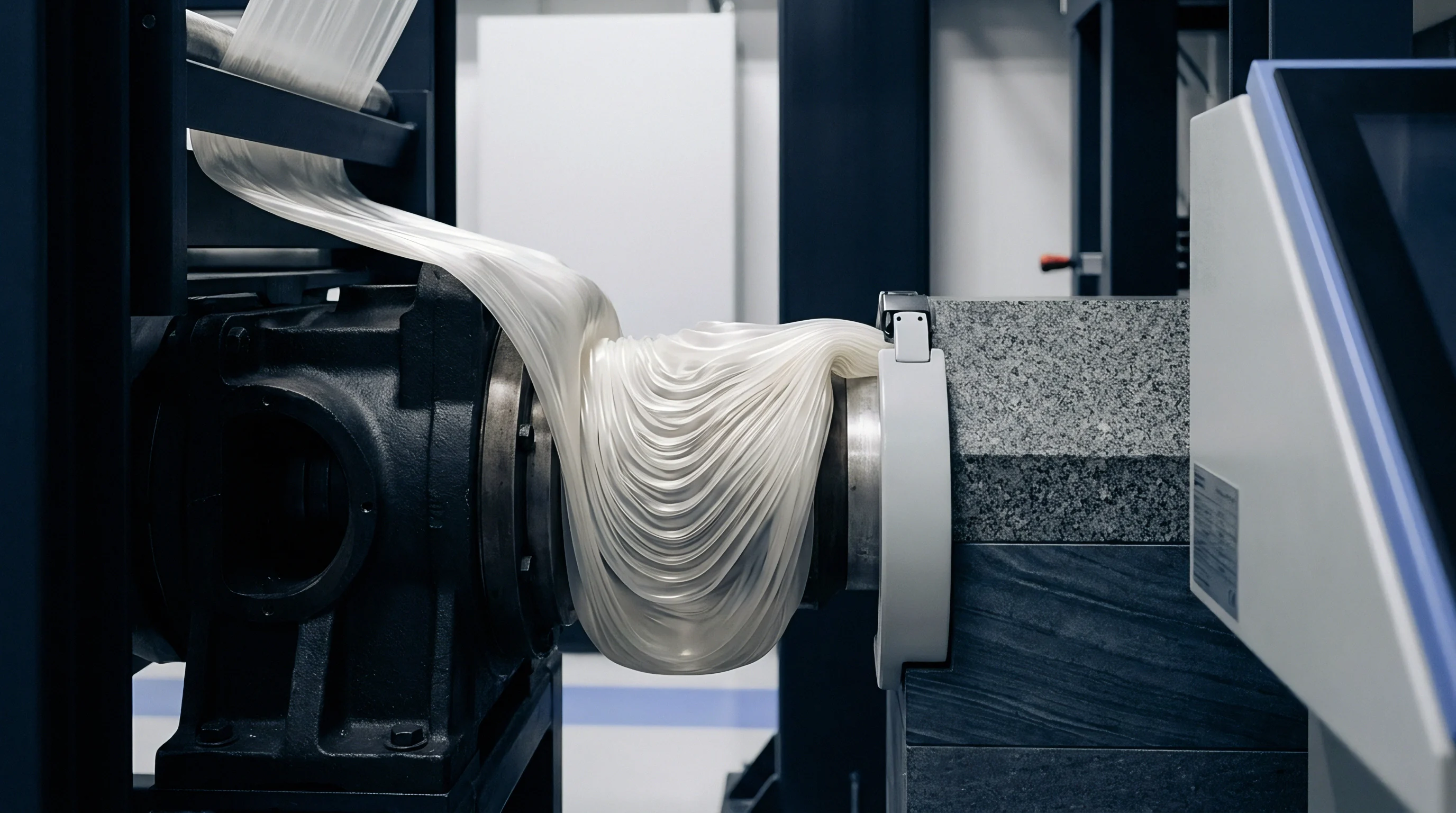
Plastometer testing under ISO 1133 Method B validates whether delivered polymer lots match nominal certificate of analysis values. Because delivered pellets drift from certified figures, quality protocols require composite sampling across top, middle, and bottom railcar compartments, testing three specimens per delivery lot. Extrusion rate testing runs at 230 degrees Celsius under a 2.16-kilogram load, preheating the polymer charge for exactly 300 seconds to prevent thermal degradation inside the test barrel.
A delivered lot rated at 70 grams per 10 minutes that shows an incoming bench test of 85 grams per 10 minutes signals uncontrolled secondary degradation during compounding or post-extrusion blending with higher-flow scrap. Conversely, a reading of 58 grams per 10 minutes indicates an under-cracked batch or unannounced broad-distribution reactor material that will short-fill thin-wall tooling. Standard purchasing contracts establish an incoming acceptance band of plus or minus eight percent from nominal datasheet values.
Any lot drifting beyond ten percent warrants shipment rejection.
Xylene Solubles and Isotactic Index Testing
Cold dissolution in aromatic solvents measures the fraction of atactic and low-molecular-weight polymer chains remaining in the resin. The ISO 16152 test method dissolves a two-gram polymer specimen in boiling ortho-xylene at 135 degrees Celsius under continuous stirring. The solution cools to 25 degrees Celsius, allowing the crystalline isotactic polypropylene fractions to precipitate out of the solvent.
Technicians filter the solution, evaporate the solvent from the remaining filtrate, and dry the residue in a vacuum oven at 100 degrees Celsius.
Commercial high-flow homopolymers maintain xylene solubles fractions between 1.5 and 3.5 weight percent. Elevated xylene solubles indicate high concentrations of low-molecular-weight atactic chains or poorly regulated catalyst donor systems. These non-crystalline fractions do not contribute to tensile stiffness or flexural resistance.
They migrate to the part surface over time, generating sticky surface exudation, dust accumulation, and mold surface deposits during high-speed molding campaigns.
Shipments exhibiting a melt flow rate deviation exceeding plus or minus ten percent under ISO 1133 permit immediate lot rejection at the receiving dock.
Volatiles Screening by Gas Chromatography
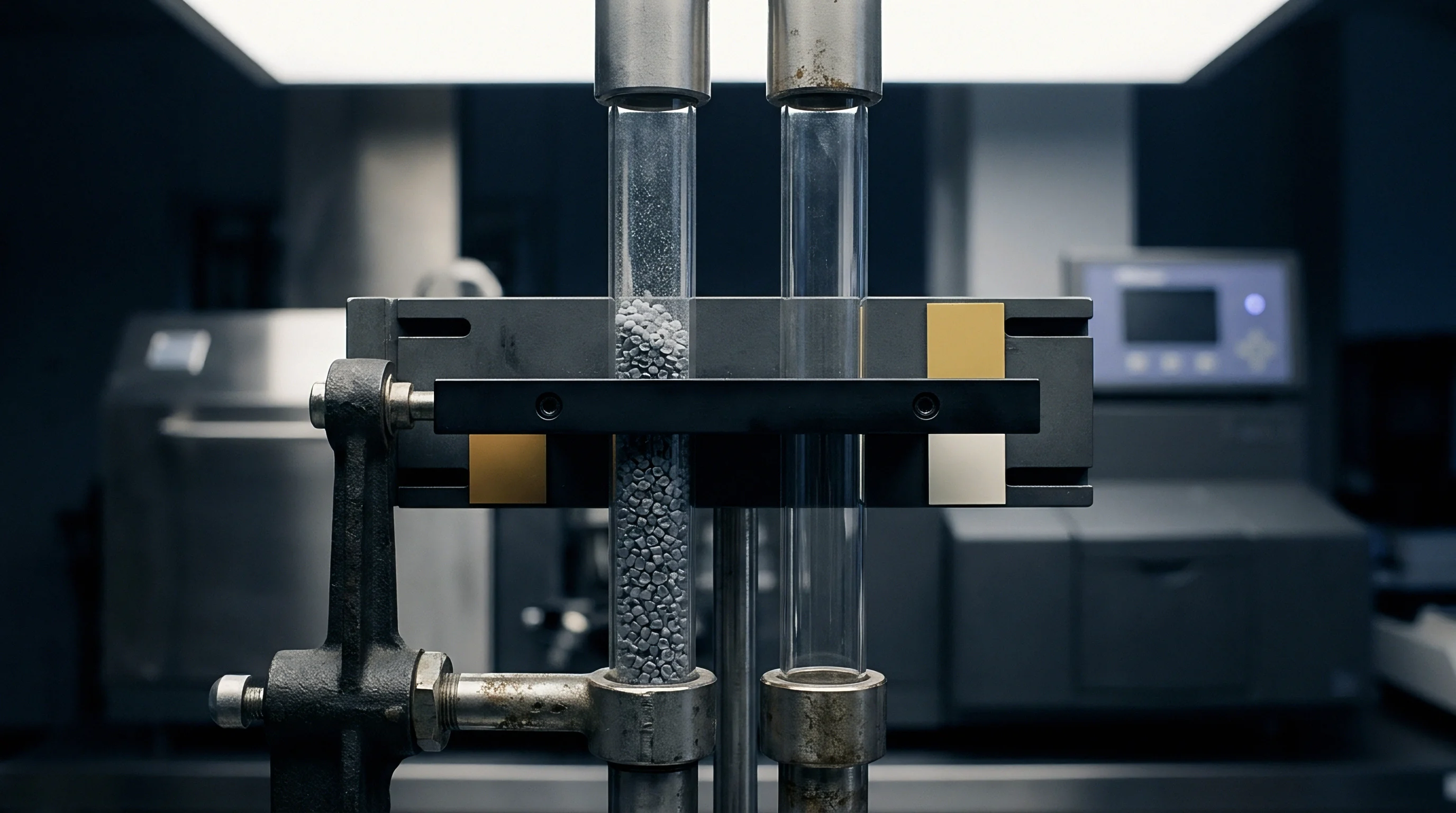
Headspace analysis performed at 150 degrees Celsius isolates volatile organic compounds released by thermal decomposition. Gas chromatography coupled with mass spectrometry identifies residual hydrocarbon cleavage products, including 2,4-dimethyl-hept-1-ene, acetone, and tert-butanol. Pellets intended for food contact containers, drinking cups, or medical closures must pass strict organoleptic thresholds.
Total volatile organic compound emissions exceeding 50 parts per million indicate incomplete devolatilization during pellet compounding.
Ash testing under ISO 3451-1 provides rapid verification of inorganic purity. Burning a ten-gram resin sample inside a muffle furnace at 600 degrees Celsius for two hours burns away all organic polymer matrices. Residual ash above 0.05 percent reveals the presence of unreacted catalyst fragments, talc slip nucleators, or inorganic masterbatch contamination.
Clean, virgin reactor homopolymer yields ash contents below 0.02 percent, maintaining structural purity and electrical insulation performance.
Every commercial resin purchase contract incorporates ASTM D1238 and ISO 16152 lot compliance tolerances as legal rejection criteria, holding suppliers responsible for all material return freight and silo decontamination expenses whenever delivered pellets violate agreed chemical specifications.