
Standard Melt Flow Index Testing Deficiencies in Recovered Polyolefin Processing
Standard melt flow index testing fails recycled polyolefins due to low-shear limits, thermal breakdown, and unmeasured pseudoplastic behavior.
Standard melt flow index testing fails recycled polyolefins due to low-shear limits, thermal breakdown, and unmeasured pseudoplastic behavior.

Melt stability discrepancies in gas pipe PE100 compounding are resolved by mandating ISO 18488 strain hardening modulus tests alongside standard melt index.

Polymer shear thinning across pipe die shear rates controls wall pressure, extrudate swell, and sag resistance, requiring multi-point viscosity validation.

Bimodal PE decouples strength from processability by pairing low MW matrix lubricant with branched high MW tie chains for high ESCR and low extrusion pressure.

Standard single-load melt index tests mischaracterize high molecular weight polyethylene by ignoring shear thinning, requiring multi-load flow ratio verification.

Dual load testing at 2.16 kg and 21.6 kg enforces molecular weight distribution limits, preventing off-spec bimodal resin from entering extrusion lines.

Polyethylene melt flow testing requires 190 °C with load selection matched to resin flow: 2.16 kg for standard grades and 21.6 kg for high-density resins.

Polyhydroxyalkanoate processing demands strict moisture control below 200 ppm and residence times under three minutes to prevent cis-elimination chain scission.

Multi-tier polyolefin silo homogenization induces viscoelastic drift via thermal compaction and micro-shear, altering melt elasticity and wall thickness.

Polyolefin melt flow shifts reveal chain scission or crosslinking under repeated shear, requiring strict multi-point viscosity and antioxidant monitoring.

Phase inversion boundaries in recycled olefin fractions shift with shear rate, necessitating combined dynamic rheology and thermal analysis for domain sizing.
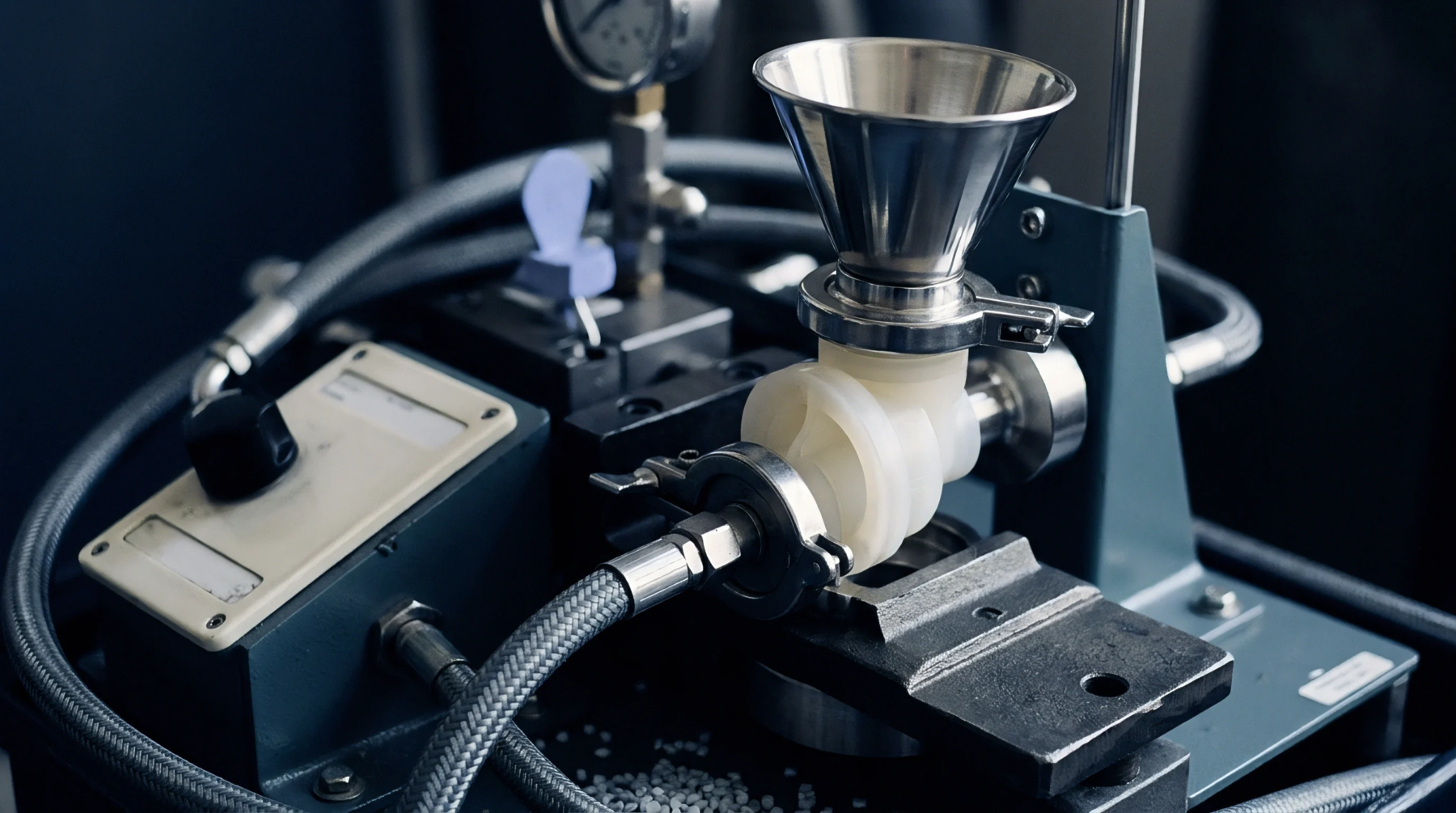
Melt flow rate thresholds for recycled polyolefin blends must be set using multi-load shear testing to bound contamination and prevent processing scrap.

Single point melt flow index testing fails to predict recycled polypropylene processing behavior due to shear thinning and contaminant induced melt instability.

Thermal and oxidative degradation alters polyolefin flake viscosity and residual stability, demanding MFR, OIT, and Carbonyl Index verification before processing.

Intrinsic viscosity loss in reprocessed PET flake is quantified by dilute solution viscometry using ASTM D4603 to prevent structural failure in preforms.

High shear molding relies on pseudoplastic shear thinning, requiring capillary rheometry over melt flow index to control viscous heating and pressure losses.

High shear compounding degrades ultra-high molecular weight tails through mechanochemical scission, best quantified by zero-shear viscosity and Mz tracking.

Low frequency storage modulus G prime below 0.1 rad/s isolates high molecular weight elastic recovery to predict bimodal pipe swell and prevent over-extrusion.

Dynamic rheology quantifies bimodal polyethylene high mass tail content by tracking zero shear viscosity and low frequency storage modulus at 190 C.

Interfacial viscous fingering during melt fractionation is controlled by tuning temperature gradients and limiting viscosity ratios across polymer phase boundaries.
Expertise is a utility, not a secret. sentiention™ publishes its working knowledge as open reference: intelligence layer covering the materials it sources, the markets it enters, and the reference that serves both.